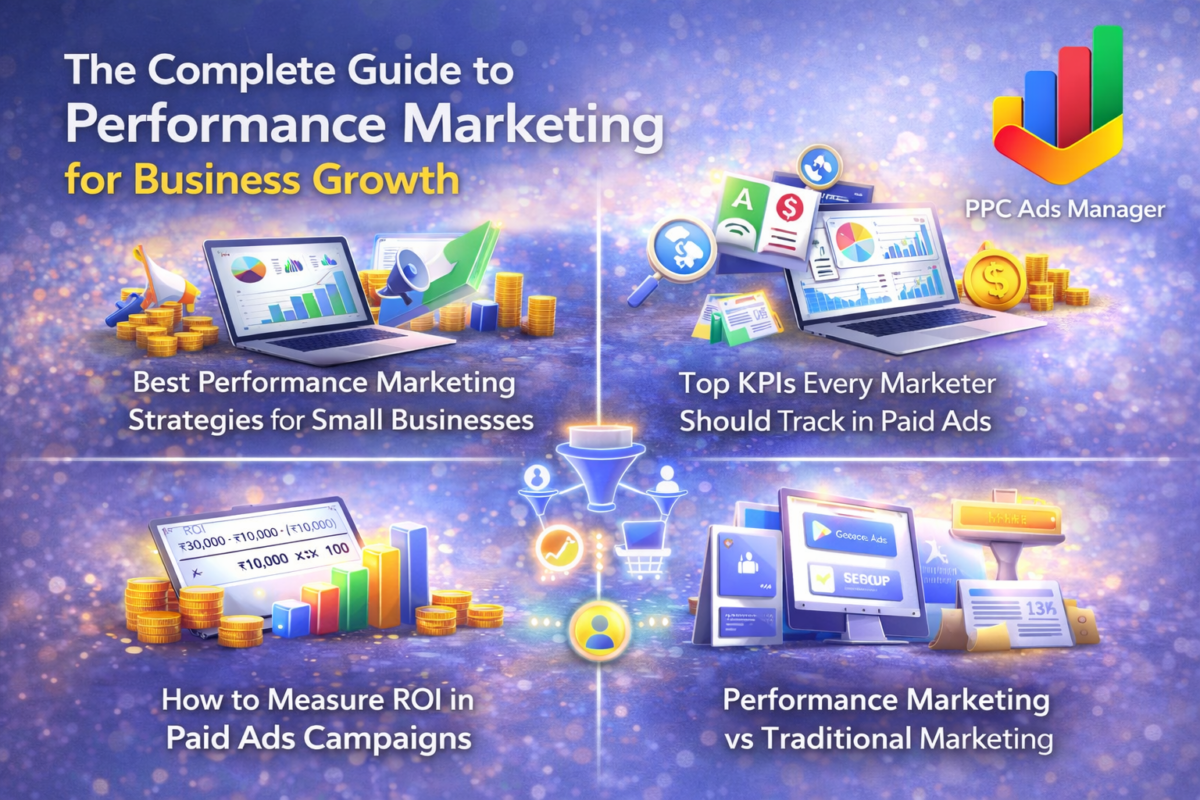
Performance marketing has reshaped how businesses approach advertising in today’s digital landscape. Instead of investing heavily in campaigns with uncertain outcomes, businesses can now track every click, lead, and sale with precision. This shift allows brands to make smarter decisions, optimize continuously, and scale based on actual results rather than assumptions.
For businesses aiming to grow efficiently, performance marketing offers a structured and measurable path forward. It is not just about running ads, it is about building a system that consistently converts attention into revenue.
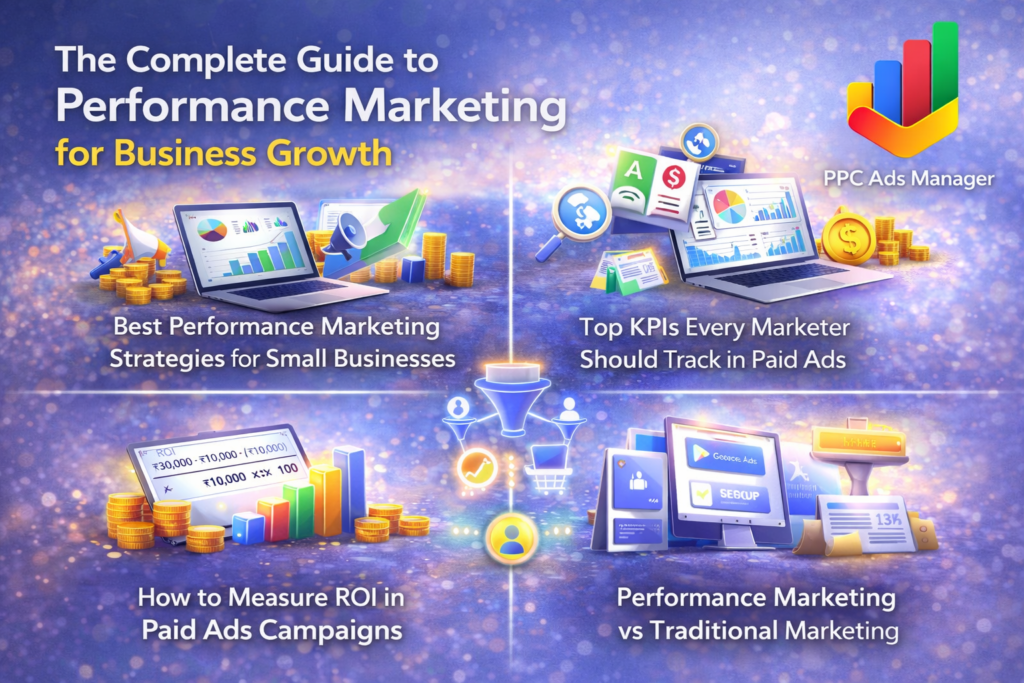
What is Performance Marketing
Performance marketing is a results driven approach where advertisers pay only when a specific action occurs. These actions can include clicks, leads, purchases, or app installs.
Unlike traditional marketing, where success is often measured by reach or impressions, performance marketing focuses on outcomes that directly impact business growth. This makes it highly effective for businesses that want accountability and clarity in their marketing efforts.
Best Performance Marketing Strategies for Small Businesses
Small businesses often operate with limited budgets, which makes efficiency critical. Performance marketing allows them to compete with larger players by focusing on precision rather than scale.
Start by defining clear goals such as cost per lead, conversion rate, or return on ad spend. These benchmarks guide your strategy and help measure success accurately. Choosing the right platforms is equally important. Search based platforms capture high intent users, while social platforms help build interest and engagement.
Landing pages play a crucial role in converting traffic. A fast, clean, and focused page can significantly improve results. Retargeting is another powerful strategy that helps re engage users who have already shown interest in your business.
Consistent testing and optimization are what separate average campaigns from high performing ones. Even small changes in creatives, targeting, or messaging can lead to meaningful improvements.
To explore this in detail, you can read more here:
https://ppcadsmanager.com/best-performance-marketing-strategies-for-small-businesses/
Top KPIs Every Marketer Should Track in Paid Ads
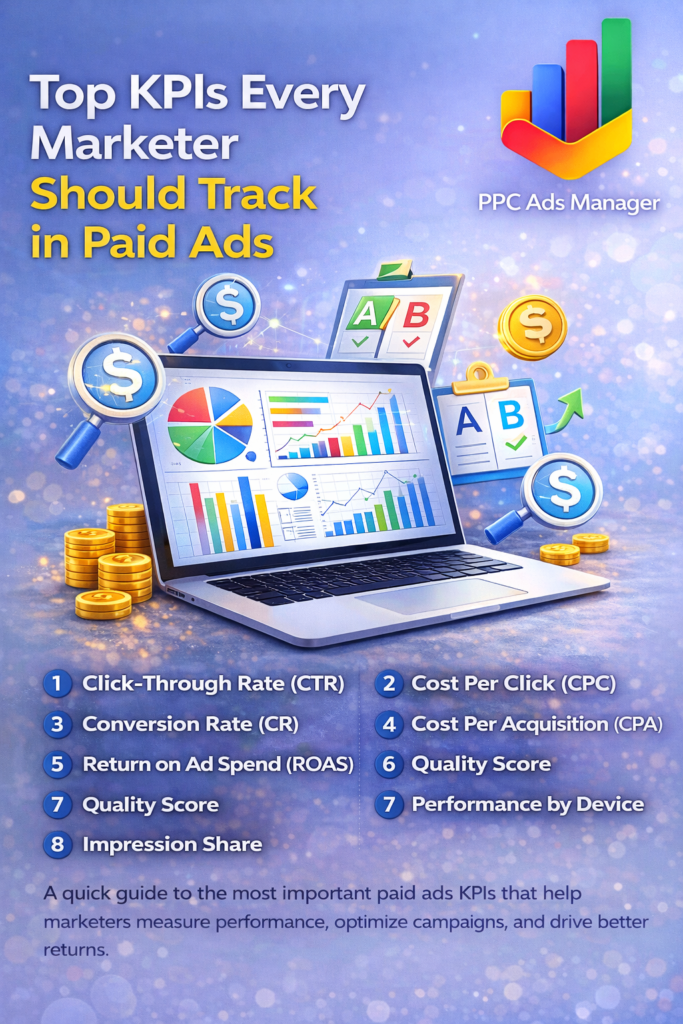
Understanding performance begins with tracking the right metrics. Without clear data, it becomes difficult to identify what is working and where improvements are needed.
Click through rate helps you understand how engaging your ads are. Cost per click shows how efficiently you are driving traffic. Conversion rate reflects how well your landing pages and offers are performing.
Cost per acquisition is one of the most critical metrics, as it tells you how much you are spending to acquire a customer or lead. Return on ad spend provides insight into how much revenue your campaigns are generating relative to spend.
Tracking these KPIs regularly allows you to make informed decisions, allocate budgets effectively, and improve overall campaign performance.
For a deeper breakdown of each KPI, visit:
https://ppcadsmanager.com/top-kpis-every-marketer-should-track-in-paid-ads/
How to Measure ROI in Paid Ads Campaigns
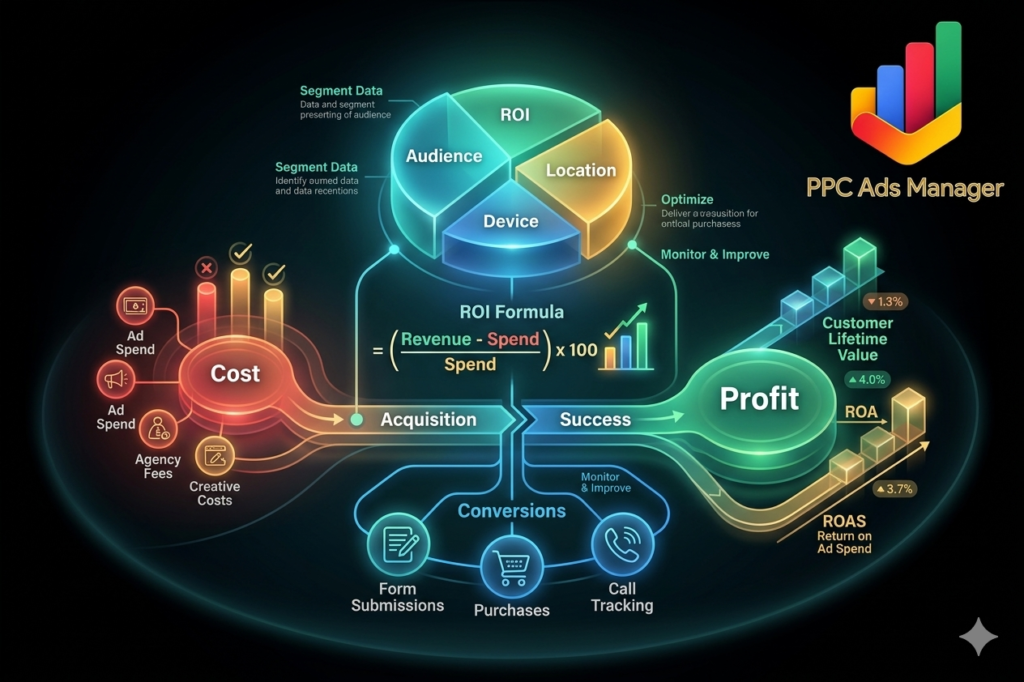
ROI is one of the most important indicators of success in performance marketing. It tells you whether your campaigns are profitable and sustainable.
The basic formula involves comparing the revenue generated from ads to the total amount spent. However, accurate ROI measurement goes beyond simple calculations. It requires proper conversion tracking, clear attribution, and an understanding of customer value.
Not all customers generate immediate returns. Some contribute more value over time, which is why considering customer lifetime value is important. Segmenting your data by audience, device, and location also helps identify which areas are delivering the best results.
By analyzing this data, you can refine your strategy, reduce wasted spend, and improve profitability over time.
To understand ROI measurement in detail, read here:
https://ppcadsmanager.com/how-to-measure-roi-in-paid-ads-campaigns/
Performance Marketing vs Traditional Marketing
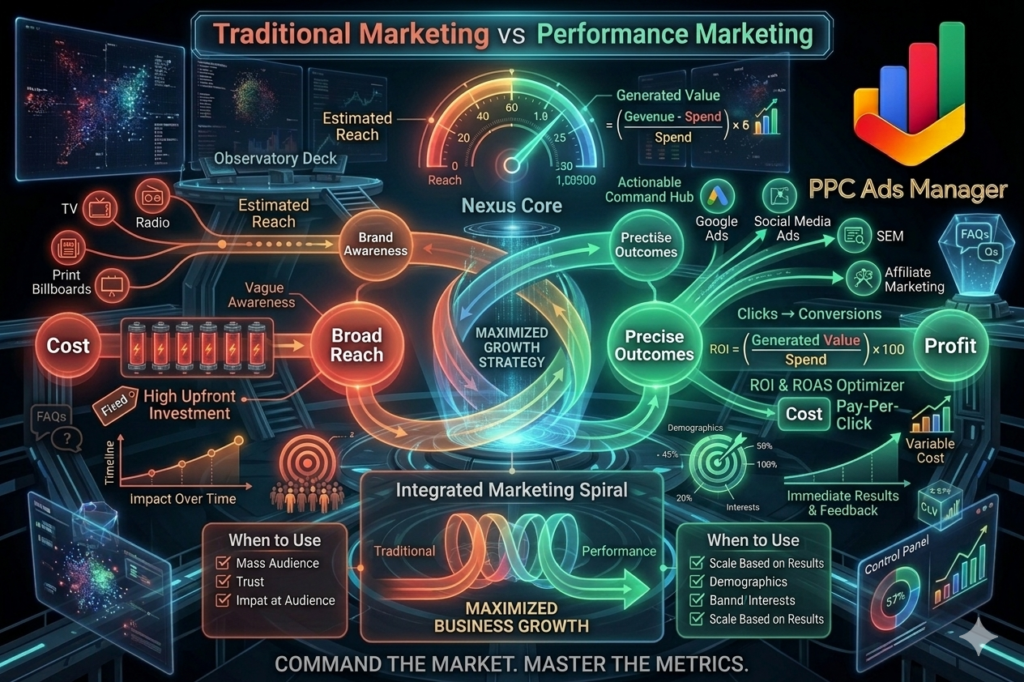
Traditional marketing methods such as print, television, and outdoor advertising have long been used to build brand awareness. These channels are effective for reaching large audiences, but they often lack precise tracking and flexibility.
Performance marketing, on the other hand, is built around measurable outcomes. It allows businesses to target specific audiences, monitor campaigns in real time, and make adjustments instantly.
While traditional marketing focuses on visibility, performance marketing focuses on results. Both approaches have their place, and many businesses benefit from using them together. Traditional marketing can create awareness, while performance marketing captures demand and drives conversions.
For a complete comparison, explore:
https://ppcadsmanager.com/performance-marketing-vs-traditional-marketing/
Building a High Performing Funnel
A successful performance marketing strategy goes beyond running ads. It involves guiding users through a structured journey.
At the awareness stage, the goal is to attract attention through informative or engaging content. During the consideration stage, users evaluate options, making it important to provide value through insights, comparisons, or case studies. The decision stage focuses on encouraging action with clear messaging and strong offers.
Aligning your campaigns with these stages improves user experience and increases the likelihood of conversion.
Common Mistakes to Avoid
Many campaigns fail not because of budget limitations but due to avoidable mistakes. Targeting the wrong audience can lead to wasted spend. Ignoring data prevents you from making informed decisions.
Sending traffic to poorly designed landing pages reduces conversion rates, while not testing creatives limits your ability to improve performance. Focusing only on clicks instead of meaningful actions can also mislead your strategy.
Avoiding these pitfalls can significantly improve your results.
Bringing It All Together
Performance marketing is a continuous process of testing, learning, and improving. It gives businesses the ability to stay agile, make data driven decisions, and scale with confidence.
With the right strategy in place, it becomes easier to turn marketing efforts into predictable growth.
If you want to evaluate your campaigns and uncover areas for improvement, you can start with a free Google Ads audit to identify opportunities and improve performance.
FAQs
1. What is performance marketing in simple terms?
It is a strategy where you pay for measurable results like clicks, leads, or sales.
2. Which KPI should I focus on the most?
It depends on your goal, but conversion rate and ROI are often the most important.
3. How long does it take to see results?
Initial results can appear within days, but consistent optimization improves long term performance.
4. Is performance marketing suitable for small businesses?
Yes, it is ideal because it allows controlled spending and measurable growth.
5. Can I combine traditional and performance marketing?
Yes, combining both can create a balanced strategy for awareness and conversions.
Mini Description:
A complete guide to performance marketing covering strategies, KPIs, ROI, and comparisons to help businesses scale effectively.
Caption:
Turn data into growth with smarter marketing.