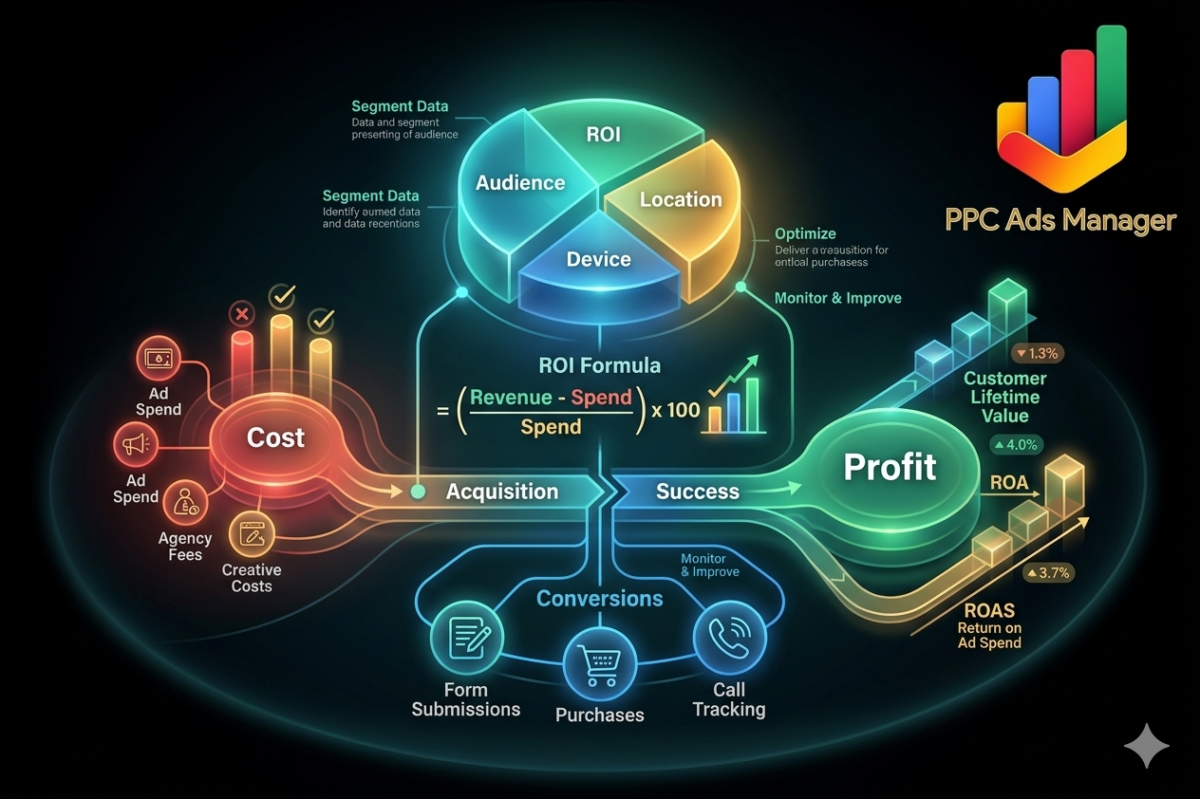
Understanding whether your paid ads are actually making money is what separates guesswork from growth. ROI in advertising is not just about revenue, it is about knowing how efficiently your budget is being turned into real business results.
What ROI in Paid Ads Really Means
ROI, or return on investment, measures how much profit you generate compared to what you spend on ads. It gives you a clear picture of whether your campaigns are working or simply consuming budget.
The basic idea is simple: if you are earning more than you are spending, your campaigns are moving in the right direction.
The Basic ROI Formula
To measure ROI, you need two key numbers: total revenue from ads and total ad spend.
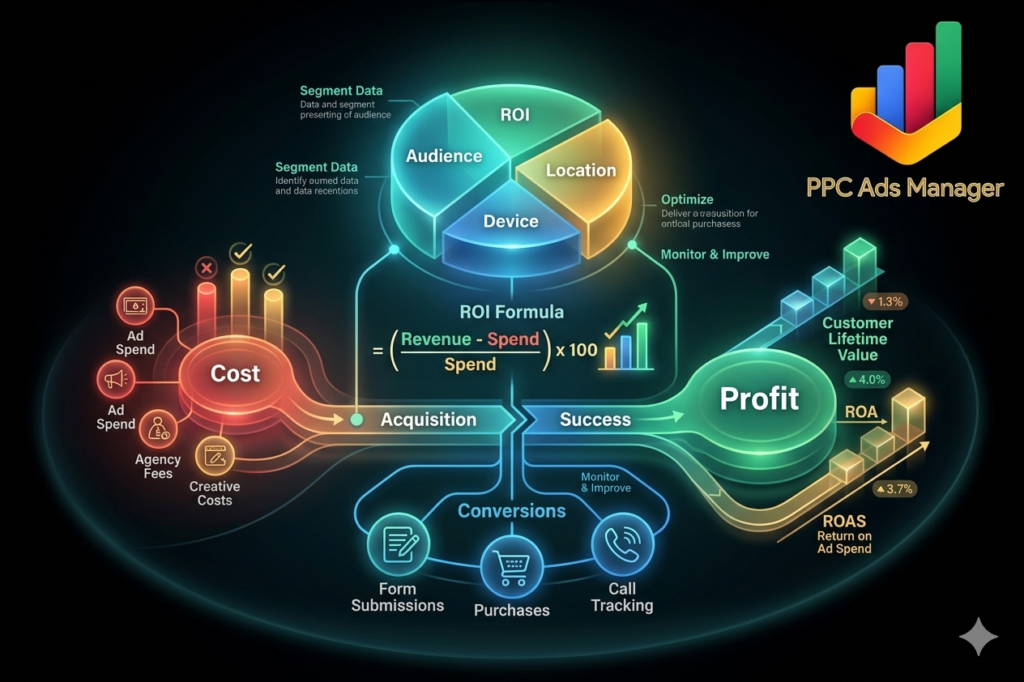
ROI = (Revenue from Ads − Ad Spend) ÷ Ad Spend × 100
For example, if you spend ₹10,000 and generate ₹30,000 in revenue, your ROI is strong and your campaign is profitable.
Track Conversions Accurately
ROI depends entirely on accurate tracking. Without proper conversion tracking, your data becomes unreliable.
Make sure you are tracking:
- Form submissions
- Purchases
- Calls and inquiries
- Key actions on your website
Using tools like Google Ads conversion tracking and analytics helps you connect clicks to actual results.
Understand Your Cost Per Acquisition
Cost per acquisition shows how much you are spending to acquire a single customer or lead. This metric directly impacts your ROI.
If your acquisition cost is too high compared to your profit margin, your campaigns will struggle to stay profitable even if they generate conversions.
Calculate Customer Lifetime Value
Not every conversion brings immediate profit. Some customers generate value over time.
Customer lifetime value helps you understand how much a customer is worth beyond the first purchase. When you factor this in, your ROI calculation becomes more realistic and strategic.
Focus on Return on Ad Spend
Return on ad spend, or ROAS, is another key metric closely related to ROI. It shows how much revenue you generate for every rupee spent.
A higher ROAS indicates better performance, but it should always be evaluated alongside profit margins.
Segment Your Campaign Data
Not all campaigns perform equally. Break down your data by:
- Audience
- Device
- Location
- Ad creatives
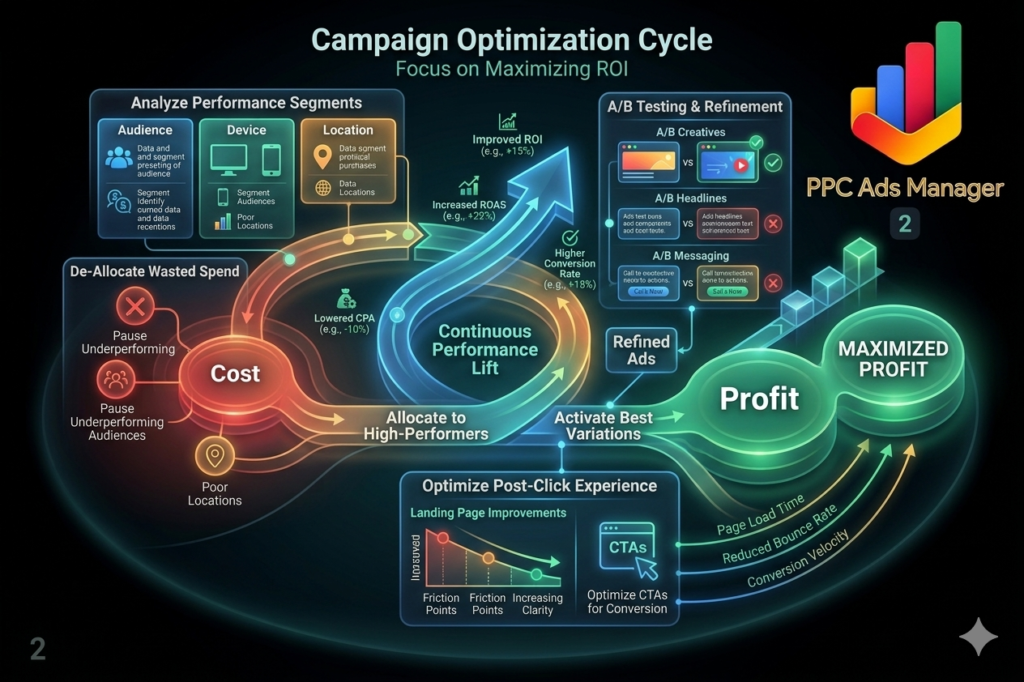
This helps you identify which segments are driving the highest returns and which ones need improvement.
Optimize Based on Insights
Once you have the data, use it to refine your campaigns.
- Pause underperforming ads
- Allocate more budget to high performing segments
- Test new creatives and messaging
- Improve landing pages for better conversions
Small adjustments based on data can significantly improve ROI over time.
Consider Hidden Costs
ROI is not only about ad spend. Factor in additional costs like:
- Agency or management fees
- Creative production
- Landing page development
A complete view ensures that your ROI calculation reflects actual profitability.
Make Data Driven Decisions
Measuring ROI is an ongoing process. As campaigns run, data evolves, and so should your strategy. Regular monitoring helps you stay aligned with your goals and avoid wasted spend.
If you want a clearer picture of your campaign performance and uncover areas where your budget can work harder, you can start with a free Google Ads audit to identify gaps and growth opportunities.
FAQs
1. What is a good ROI for paid ads?
It depends on your industry and margins, but generally, a positive ROI where revenue exceeds ad spend is considered good.
2. How is ROI different from ROAS?
ROI measures profit, while ROAS focuses only on revenue generated from ads.
3. Why is tracking important for ROI?
Without accurate tracking, you cannot connect ad spend to actual results, making ROI calculations unreliable.
4. Can I measure ROI for lead generation campaigns?
Yes, by assigning value to leads based on conversion rates and customer lifetime value.
5. How often should I check ROI?
Regular monitoring is important, but weekly or monthly analysis works best for most campaigns.