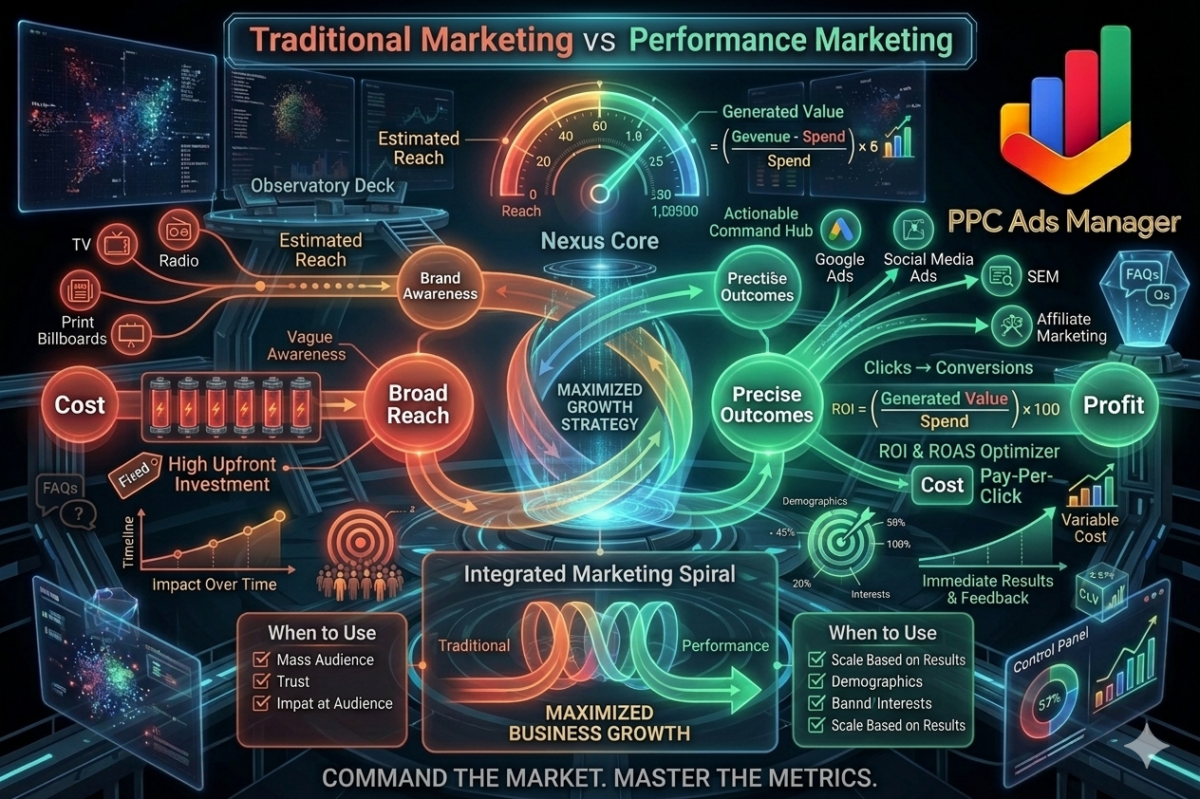
Marketing has evolved rapidly, shifting from broad, brand focused campaigns to highly targeted, data driven strategies. While traditional marketing still holds value, performance marketing has become the preferred approach for businesses that want measurable and scalable results.
Understanding the difference between the two helps you choose the right strategy based on your goals, budget, and audience.
What is Traditional Marketing
Traditional marketing includes channels that have been used for decades to build brand awareness and reach mass audiences.
- Television ads
- Radio commercials
- Print media like newspapers and magazines
- Billboards and outdoor advertising
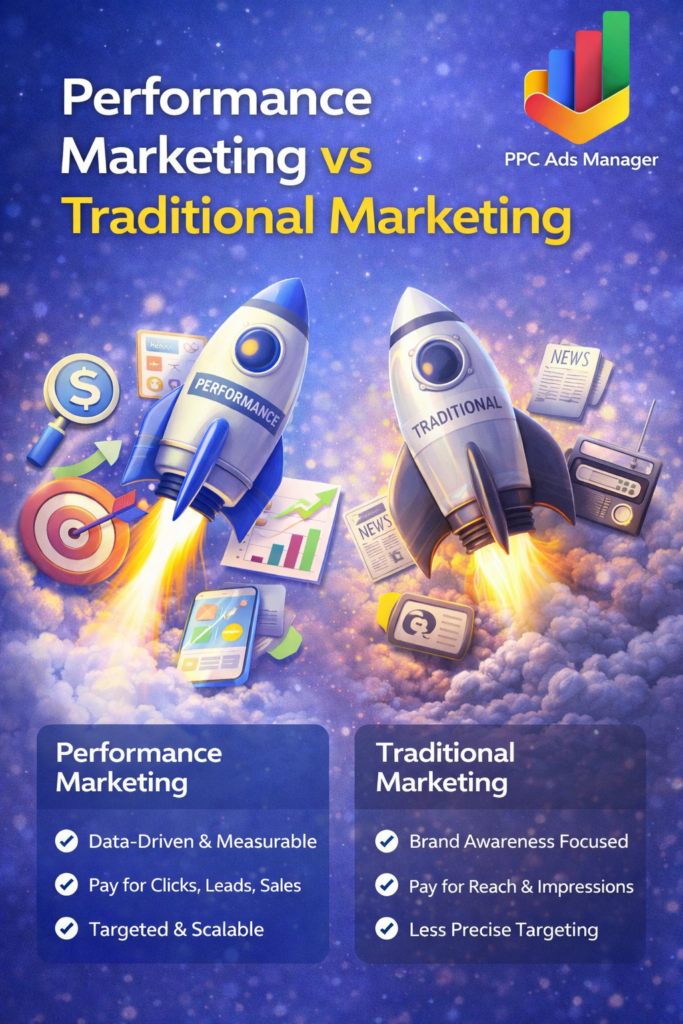
These methods are effective for visibility and brand recall, especially when targeting a wide audience. However, tracking exact results can be challenging.
What is Performance Marketing
Performance marketing focuses on measurable outcomes such as clicks, leads, or sales. You pay only when a specific action is completed.
Common channels include:
- Google Ads
- Social media ads
- Search engine marketing
- Affiliate marketing
This approach allows businesses to monitor performance in real time and optimize campaigns based on data.
Key Differences Between Performance and Traditional Marketing
Measurability
Traditional marketing often relies on estimated reach and impressions. Performance marketing provides clear data on clicks, conversions, and return on investment.
Cost Structure
Traditional marketing usually requires upfront investment regardless of results. Performance marketing is outcome driven, meaning you pay for actual performance.
Targeting
Traditional methods target broad audiences. Performance marketing allows precise targeting based on demographics, interests, behavior, and intent.
Flexibility
Traditional campaigns are harder to modify once launched. Performance campaigns can be adjusted instantly based on performance insights.
Speed of Results
Traditional marketing builds impact over time. Performance marketing can generate immediate results and quick feedback.
When to Use Traditional Marketing
Traditional marketing works well when your goal is to:
- Build brand awareness at scale
- Establish credibility and trust
- Reach audiences that are less active online
It is often used by large brands looking for long term visibility.
When to Use Performance Marketing
Performance marketing is ideal when you want to:
- Generate leads or sales quickly
- Track every rupee spent
- Optimize campaigns continuously
- Scale based on results
It is especially useful for small and medium businesses with limited budgets.
Why a Balanced Approach Works Best
Rather than choosing one over the other, many businesses benefit from combining both strategies. Traditional marketing builds awareness, while performance marketing captures demand and drives conversions.
The key is aligning your approach with your business goals and using data to guide your decisions.
If you want to understand how your current campaigns are performing and where you can improve efficiency, you can explore a free Google Ads audit to identify opportunities for better results.
FAQs
1. Which is more cost effective, traditional or performance marketing?
Performance marketing is generally more cost effective because you pay for measurable results.
2. Is traditional marketing still relevant today?
Yes, it is still valuable for brand building and mass reach, especially in certain industries.
3. Can small businesses use traditional marketing?
They can, but it may require higher budgets compared to performance marketing.
4. How quickly can I see results with performance marketing?
Results can appear quickly, often within days, depending on your campaign setup.
5. Should I use both strategies together?
Yes, combining both can create a strong balance between awareness and conversions.