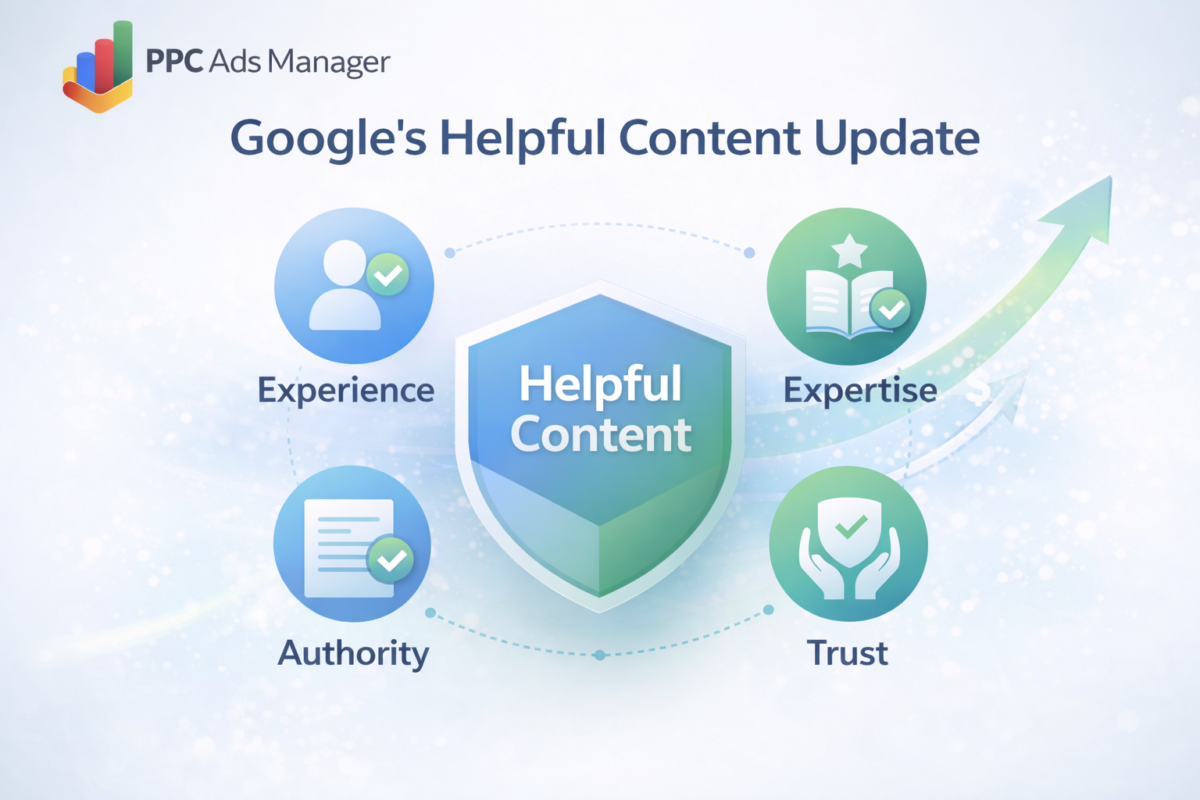
Google’s Helpful Content Update was designed to prioritize content created for people rather than search engines. Since the rise of large-scale AI tools, this update has become especially relevant. While Google does not penalize AI-generated content simply because it is AI-created, low-quality AI blogs often fail to meet the Helpful Content system’s standards.
The risk is not artificial intelligence itself.
The risk is automation without expertise.
In competitive global markets, businesses relying solely on AI-generated blogs are increasingly seeing unstable rankings, lower engagement, and reduced organic growth.
Let’s break down why.
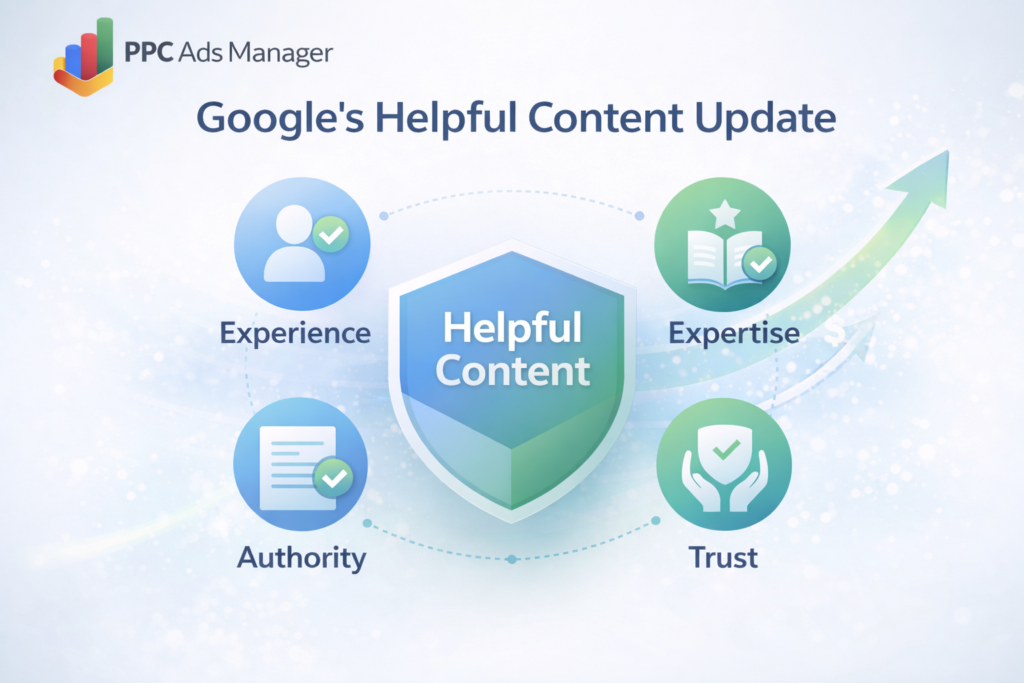
What Is Google’s Helpful Content Update?
Google’s Helpful Content Update is part of a broader quality system that evaluates whether content demonstrates genuine expertise and usefulness.
The system focuses on:
- People-first content
- Experience and authority signals
- Original insights
- Clear intent alignment
- Avoidance of mass-produced low-value pages
It is site-wide in nature. This means a high volume of unhelpful pages can affect the overall ranking strength of an entire domain.
That is where AI-generated blogs become risky.
Does Google Penalize AI Content?
No. Google has publicly clarified that it evaluates content quality, not the method of creation.
However:
Low-quality AI-generated blogs often trigger quality signals associated with unhelpful content.
This distinction is critical.
| Scenario | Likely Outcome |
| AI-generated, unedited, generic blogs | Low engagement, ranking instability |
| AI-assisted but expert-reviewed content | Stable performance potential |
| Human-led, data-backed authority content | Higher ranking resilience |
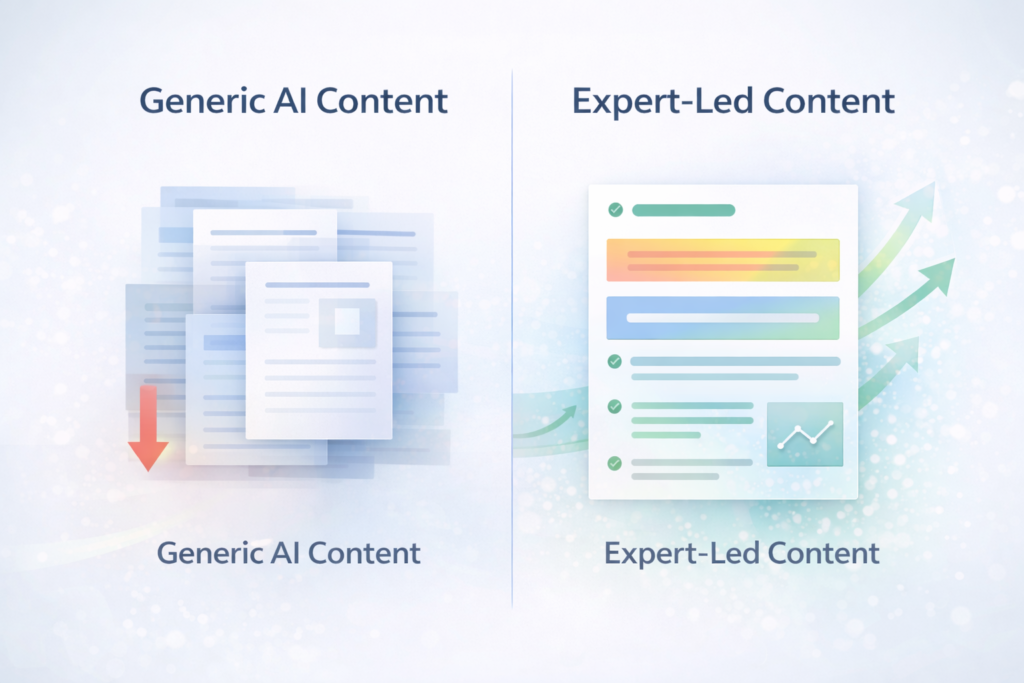
The Helpful Content system does not target AI. It targets thin, repetitive, or search-engine–focused content.
Why AI-Generated Blogs Are Risky in Competitive Niches
In high-competition industries such as SaaS, finance, healthcare, legal, and B2B technology, surface-level content struggles to rank.
AI-generated blogs commonly fail in four areas:
1. Lack of Real Experience
AI synthesizes patterns.
It does not demonstrate firsthand knowledge.
Example:
Generic AI output:
“SEO helps businesses increase traffic.”
Authority-driven content:
“A SaaS company targeting 12 bottom-of-funnel keywords improved organic leads by 38% over nine months through structured content clusters.”
Specificity matters.
2. Repetitive Structure Patterns
Many AI blogs follow identical outlines:
- Definition
- Benefits
- Tips
- Conclusion
When hundreds of websites publish near-identical frameworks, differentiation disappears.
Google’s ranking systems reward uniqueness.
3. Weak EEAT Signals
EEAT stands for:
- Experience
- Expertise
- Authoritativeness
- Trustworthiness
AI-generated blogs often lack:
- Author bios
- Original research
- Industry citations
- Transparent methodology
In 2026, EEAT is not optional. It is foundational.
4. Low Engagement Metrics
User signals matter:
- Time on page
- Bounce rate
- Scroll depth
- Return visits
Generic AI blogs often result in:
- Short dwell time
- Minimal interaction
- Low backlink acquisition
These behavioral signals can indirectly influence ranking sustainability.
Real-World Scenario: AI Mass Publishing vs Strategic Publishing
Consider two global digital marketing agencies.
Agency A – AI Automation Model
- Publishes 200 AI-generated blogs in six months
- Minimal human review
- No author attribution
- Generic keyword targeting
Result:
- Initial indexing spike
- Temporary traffic increase
- Noticeable ranking decline after quality updates
Agency B – Hybrid Expert Model
- Publishes 3–4 in-depth blogs monthly
- Human expert review
- Structured internal linking
- Case-study inclusion
- Clear author credentials
Result:
- Slower growth initially
- Stable ranking improvement
- Increased backlink acquisition
- Higher conversion rates
Quality compounds. Volume without oversight erodes trust.
Industry Standards and Ranking Benchmarks
In competitive global markets:
- 1,200–1,800 words perform better for informational queries.
- Content clusters outperform isolated blogs.
- Structured formatting improves crawl efficiency.
- Backlinks remain a core ranking factor.
Helpful content aligns with industry best practices:
- Demonstrated expertise
- Clear topic focus
- Intent alignment
- Internal linking structure
- Consistent publishing
AI alone does not guarantee these elements.
Common Mistakes Businesses Make
1. Publishing AI Drafts Without Editing
This leads to:
- Repetitive phrasing
- Factual inaccuracies
- Weak argumentation
- Thin analysis
2. Chasing Volume Over Strategy
Mass production rarely equals authority.
Publishing 100 low-value blogs does not outperform 12 strategically mapped articles.
3. Ignoring Site-Wide Quality Signals
The Helpful Content system evaluates overall content quality.
If 60% of a site’s content lacks depth, the entire domain may struggle.
How to Use AI Without Triggering Risk
AI can be powerful when used correctly.
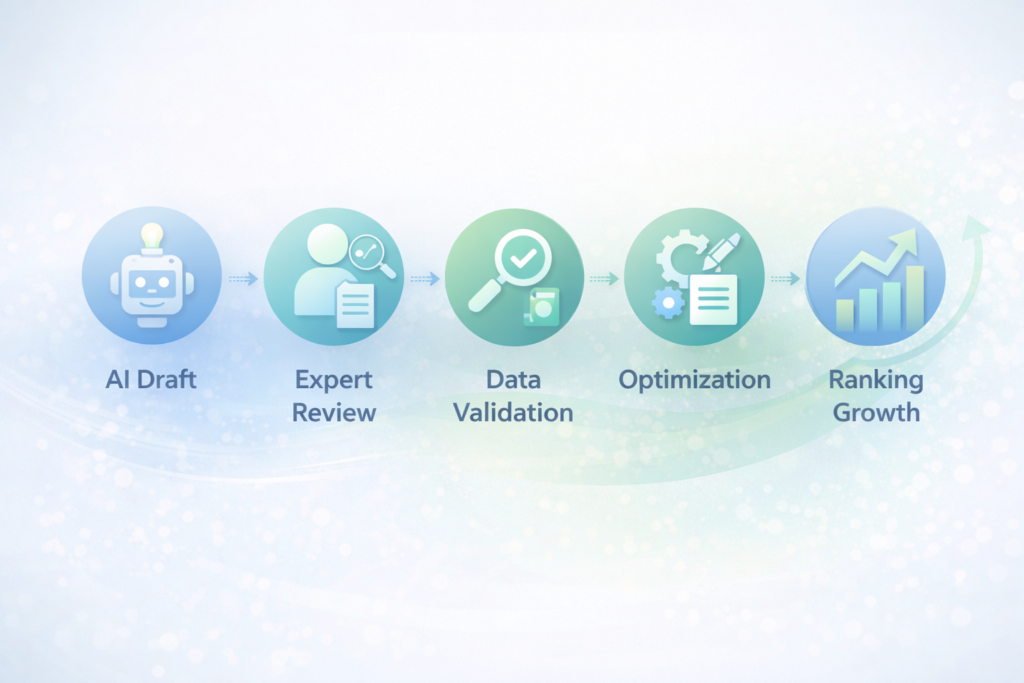
Best practices:
- Use AI for research summaries.
- Draft outlines for efficiency.
- Add human analysis and experience.
- Include real examples and case data.
- Fact-check all statistics.
- Ensure author transparency.
Hybrid content models reduce risk significantly.
Ranking Potential in High-Competition Markets
To compete globally, content must:
- Demonstrate clear expertise
- Address user intent directly
- Include structured formatting
- Provide actionable insight
- Offer unique perspective
If your AI-generated blog reads like 20 other articles in the SERP, it will struggle to rank.
Differentiation is mandatory.
The Strategic Takeaway
Google’s Helpful Content Update reinforces one principle:
Content must serve users first.
AI-generated blogs are risky when:
- They prioritize scale over quality
- They lack expert oversight
- They offer no original value
- They duplicate existing structures
AI-assisted, human-led strategies remain effective.
Fully automated content farms face long-term ranking instability.
Conclusion
Google’s Helpful Content Update does not ban AI content. It penalizes unhelpful content.
Businesses relying on AI-generated blogs without expertise risk:
- Ranking volatility
- Reduced authority
- Lower engagement
- Site-wide performance decline
The winning approach in 2026 is not human versus AI.
It is AI-assisted efficiency combined with expert-driven strategy.
That balance builds authority, trust, and sustainable organic growth.
Frequently Asked Questions
1. Does Google penalize AI-generated blogs?
No. Google evaluates content quality, not the creation method. Low-value content may lose rankings regardless of whether it was AI or human-written.
2. Can AI-generated blogs rank in competitive industries?
They can rank if properly reviewed, enhanced with expertise, and aligned with search intent. Purely automated content struggles in high-competition niches.
3. What does Google consider “helpful content”?
Content that demonstrates expertise, answers user intent clearly, provides original insight, and avoids mass-produced low-value pages.
4. What is the safest SEO content strategy in 2026?
Use AI for efficiency but ensure human oversight, data validation, structured formatting, and strong EEAT signals.
Rohith Bingi
SEO & Performance Marketing Strategist