Introduction
The real estate market is highly competitive, both offline and online. Buyers and investors actively search on Google when they are ready to enquire, visit a site, or book a property. This makes Google Ads one of the most effective digital marketing channels for real estate businesses.
When planned and managed correctly, Google Ads helps real estate developers, brokers, and agencies reach high-intent users, generate qualified leads, and improve sales efficiency. This guide explains how Google Ads works for real estate, which campaign types perform best, common mistakes to avoid, and how to get consistent results.
Why Google Ads Works Well for Real Estate Businesses
Google Ads focuses on search intent. This means your ads appear when people are already looking for properties or real estate services.
Key benefits include:
- Reaching users actively searching for properties
- Location-based targeting for local projects
- Full control over budget and ad visibility
- Measurable leads and ROI
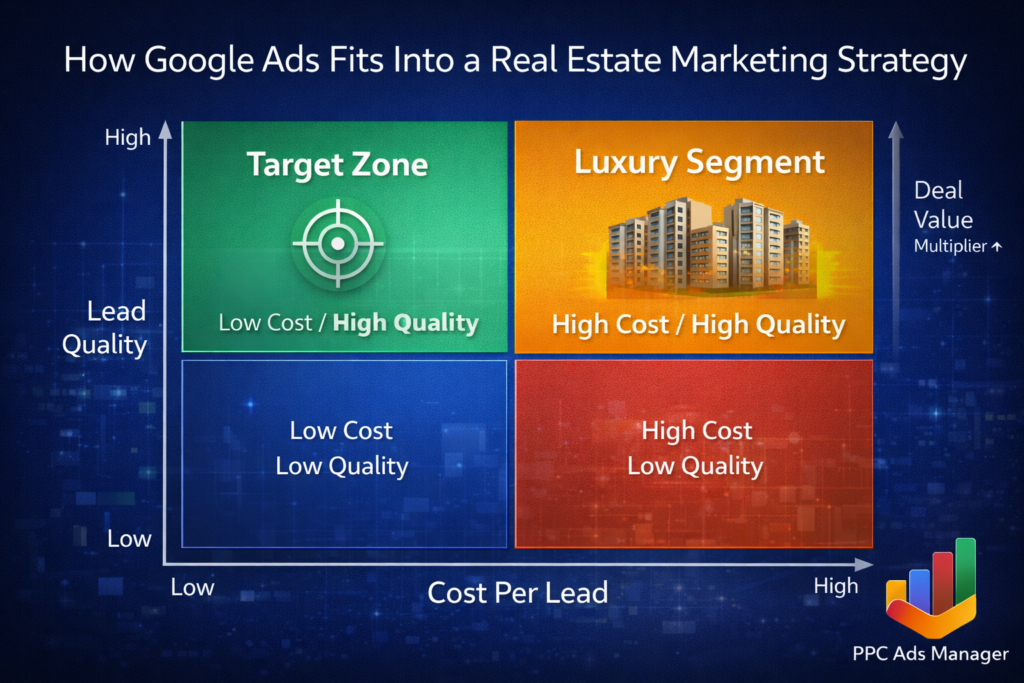
For example, someone searching for “2 BHK flats in Hyderabad” is much more likely to convert than someone casually scrolling social media.
Types of Google Ads Campaigns for Real Estate
1. Search Ads (Most Important)
Search ads appear at the top of Google search results when users type relevant keywords.
Best for:
- Residential and commercial projects
- Ready-to-move properties
- Real estate brokers and agencies
Example searches:
- Apartments for sale near me
- Villas in Bangalore price
- Commercial office space for rent
Search ads usually deliver the highest quality leads for real estate.
2. Display Ads
Display ads show visual banners across websites, apps, and Google partner platforms.
Best use cases:
- Brand awareness
- Retargeting website visitors
- Project recall campaigns
Display ads work best when combined with search ads, not as a standalone strategy.
3. YouTube Ads for Real Estate
YouTube ads allow you to showcase property walkthroughs, amenities, and location highlights.
Best for:
- Large residential projects
- Luxury properties
- Retargeting interested users
Video ads help build trust and brand recall but should support search campaigns.
Keyword Strategy for Real Estate Google Ads
Keyword selection is critical for controlling costs and lead quality.
High-Intent Keyword Types
- Property type keywords (apartments, villas, plots)
- Location-specific keywords
- Project or builder names
- “Near me” and price-related searches
Keywords to Avoid
- Generic terms like real estate or property
- Job-related searches
- Informational keywords with no buying intent

Using phrase match and exact match keywords helps improve relevance and reduce wasted spend.
Creating High-Converting Landing Pages
Sending ad traffic to a homepage is one of the most common mistakes in real estate advertising.
A good real estate landing page should include:
- Clear project details and location
- Key amenities and highlights
- Price range or starting price
- Strong call-to-action (CTA)
- Simple and short enquiry form
Well-optimised landing pages improve conversion rates and reduce cost per lead.
Cost of Google Ads for Real Estate
The cost of Google Ads depends on location, competition, and keyword demand.
Typical cost ranges:
| Metric | Estimated Range |
| Cost per Click (CPC) | ₹20 – ₹300+ |
| Cost per Lead (CPL) | ₹500 – ₹5,000+ |
Metro cities and luxury projects usually have higher costs but also higher deal values.
Common Mistakes Real Estate Businesses Make
Avoiding these mistakes can save a significant budget.
- Targeting very broad keywords
- Not using negative keywords
- Ignoring conversion tracking
- Using poor landing pages
- Running ads without location targeting
Google Ads requires regular monitoring and optimisation, not a one-time setup.
Best Practices for Better Results
To get consistent performance from Google Ads:
- Focus on lead quality, not lead volume
- Optimise ads and keywords weekly
- Use call tracking and CRM integration
- Retarget website visitors
- Align sales teams with ad messaging
Real estate campaigns perform best when marketing and sales work together.
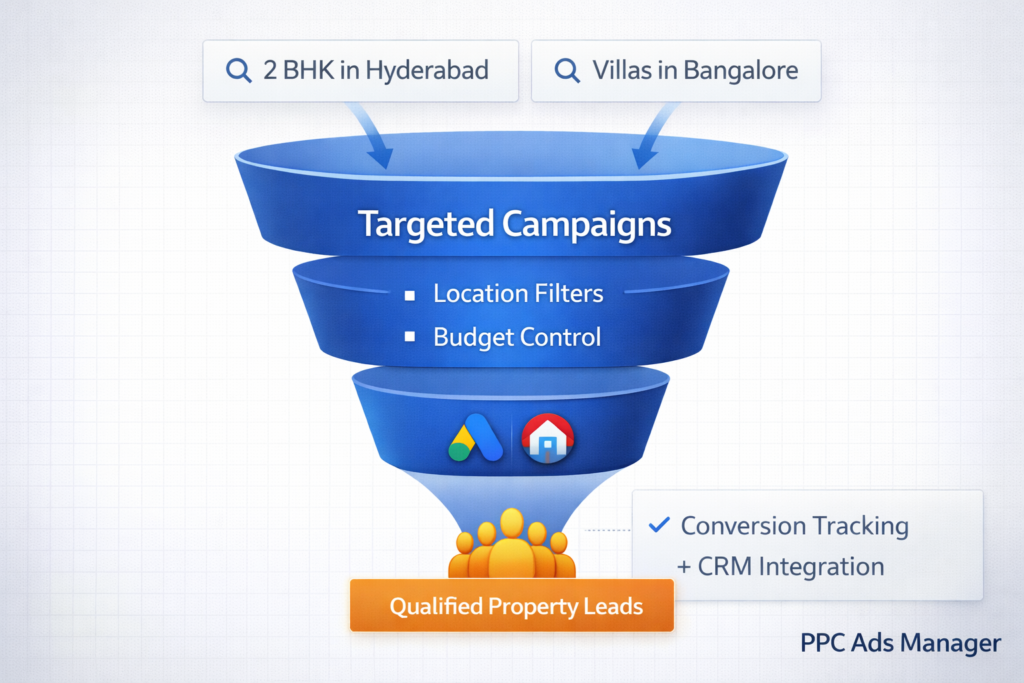
How Google Ads Fits Into a Real Estate Marketing Strategy
Google Ads works best when combined with:
- SEO for long-term organic visibility
- Social media ads for brand awareness
- Retargeting for follow-ups
- Email and CRM nurturing
This multi-channel approach improves lead conversion and sales closure rates.
Conclusion
Google Ads is a powerful lead generation tool for real estate businesses when executed strategically. By targeting high-intent searches, using the right keywords, and directing users to optimised landing pages, real estate developers and agencies can generate consistent, high-quality leads. With proper planning, tracking, and optimisation, Google Ads can become a reliable growth channel for real estate marketing
Written by Rohith Bingi