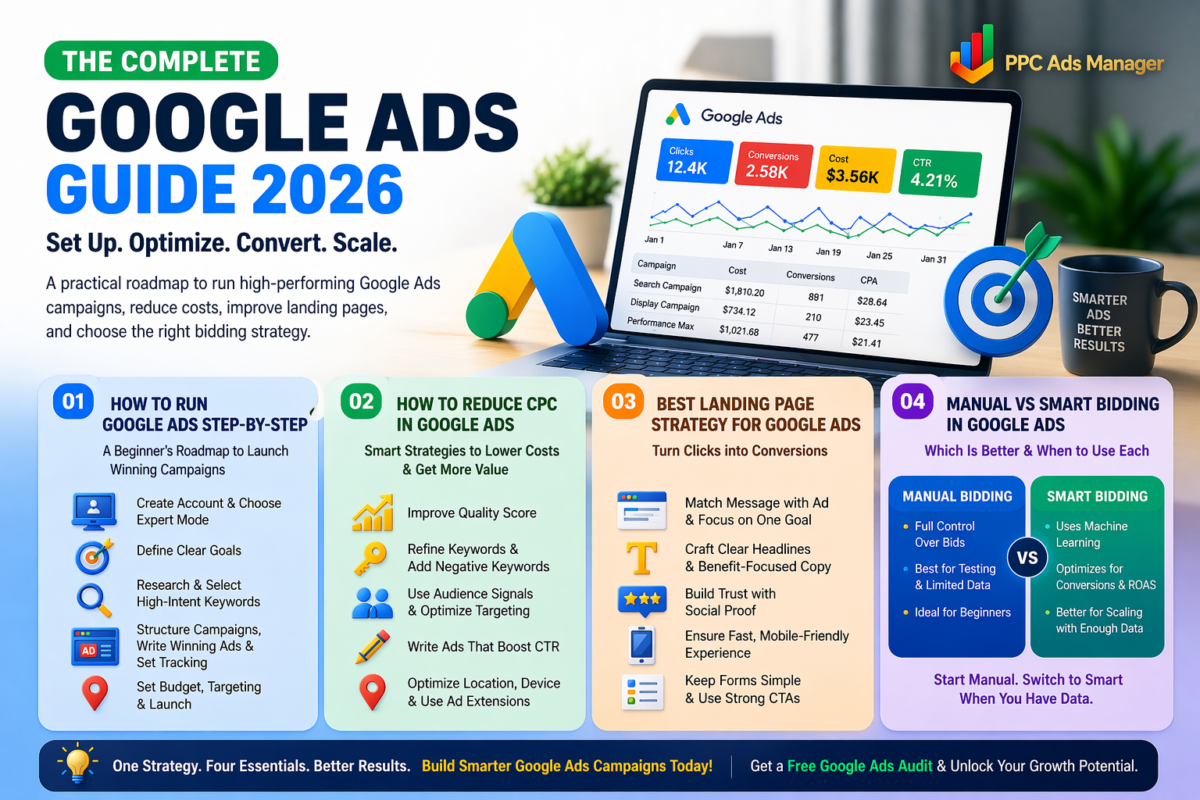
Google Ads is no longer just about running ads and hoping for clicks. It is a complete performance system where multiple elements work together to drive real business results. Many advertisers focus only on one part, such as keywords or bidding, but true success comes from understanding how everything connects.
A well built Google Ads strategy starts with the right setup, evolves through cost optimization, strengthens through high converting landing pages, and scales with the right bidding approach. When these elements are aligned, campaigns become more predictable, efficient, and profitable.
This pillar guide is designed to give you a clear overview of the four most important areas of Google Ads. Each section introduces a core concept and prepares you to go deeper into detailed topic specific content.
How to Run Google Ads Step by Step (Beginner Foundation)
Every successful campaign begins with a strong foundation. Setting up Google Ads the right way ensures that your future optimizations are built on accurate data and structured targeting.
The first step is creating your account in Expert Mode, which allows full control over campaigns. From there, defining a clear goal becomes critical because every decision, from keywords to bidding, depends on what you want to achieve.
Campaign type selection plays a major role in early success. Search campaigns are often the best starting point because they target users actively searching for your service. This means higher intent and better conversion potential.
Keyword research shapes the quality of your traffic. Focusing on intent driven and long tail keywords helps you avoid wasted spend while attracting users who are more likely to take action.
Campaign structure is what connects everything together. Organizing keywords into tightly themed ad groups improves relevance, which directly impacts both performance and cost efficiency.
Ad copy is your first impression. Clear messaging, strong value propositions, and trust signals help increase engagement and bring in better quality clicks.
Without proper conversion tracking, none of this can be measured effectively. Tracking allows you to understand what is working and where improvements are needed.
This step by step approach creates a solid base that supports every advanced strategy you apply later.Click here to find out more about it.
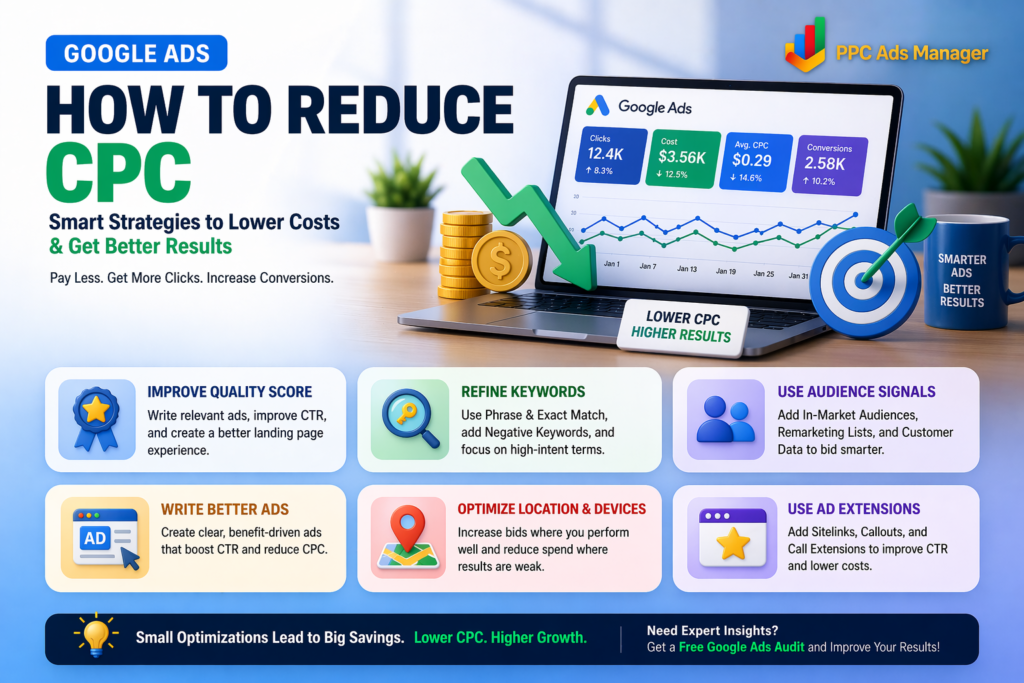
How to Reduce CPC in Google Ads (Cost Efficiency Strategy)
Once your campaigns are running, the next priority is controlling costs without sacrificing quality. Reducing CPC is not about lowering bids blindly, but about improving the overall efficiency of your campaigns.
Quality Score is one of the most important factors influencing CPC. When your ads are relevant and your landing page provides a good experience, Google rewards you with lower costs.
Keyword refinement is another key area. Eliminating irrelevant searches through match types and negative keywords ensures your budget is spent only on high intent users.
Audience targeting adds precision to your campaigns. By focusing on users who are more likely to convert, you reduce wasted clicks and improve overall performance.
Ad engagement also plays a role. Higher click through rates often lead to lower CPC, which makes strong ad copy a critical component of cost reduction.
Optimizing location and device targeting ensures that your ads perform well across different segments, helping you allocate budget more effectively.
This strategy shifts your focus from simply reducing costs to maximizing value from every click.Here’s more about it.
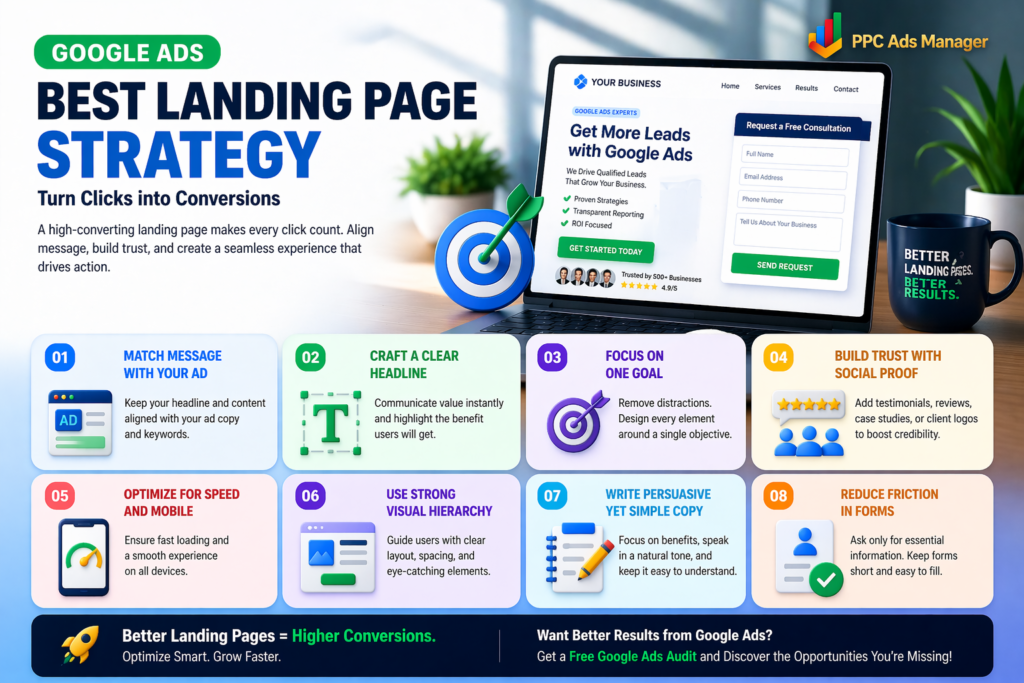
Best Landing Page Strategy for Google Ads (Conversion Optimization)
Traffic alone does not generate results. What happens after the click determines whether your campaign succeeds or fails.
A high converting landing page starts with message alignment. Users should immediately see that the page matches what they clicked on. This builds trust and keeps them engaged.
Clarity is essential. A strong headline and focused content help users understand your offer quickly. Confusion leads to drop offs, while clarity drives action.
Design and structure guide user behavior. Clean layouts, clear sections, and visual hierarchy make it easier for visitors to navigate and take action.
Social proof strengthens credibility. Testimonials and real results reduce hesitation and make your offer more convincing.
Speed and mobile optimization are critical factors. A slow or poorly optimized page can waste even the best traffic.
Reducing friction, especially in forms, increases conversions. The easier it is for users to take action, the higher your conversion rate will be.
Landing page optimization transforms clicks into measurable business outcomes and completes the performance cycle of your campaigns. To know more about it, click here.
Manual vs Smart Bidding in Google Ads (Scaling and Optimization)
Bidding is where strategy meets execution. It determines how your budget is spent and how effectively your campaigns compete in auctions.
Manual bidding gives you direct control over how much you pay for each click. It is especially useful in the early stages when you are still collecting data and testing performance.
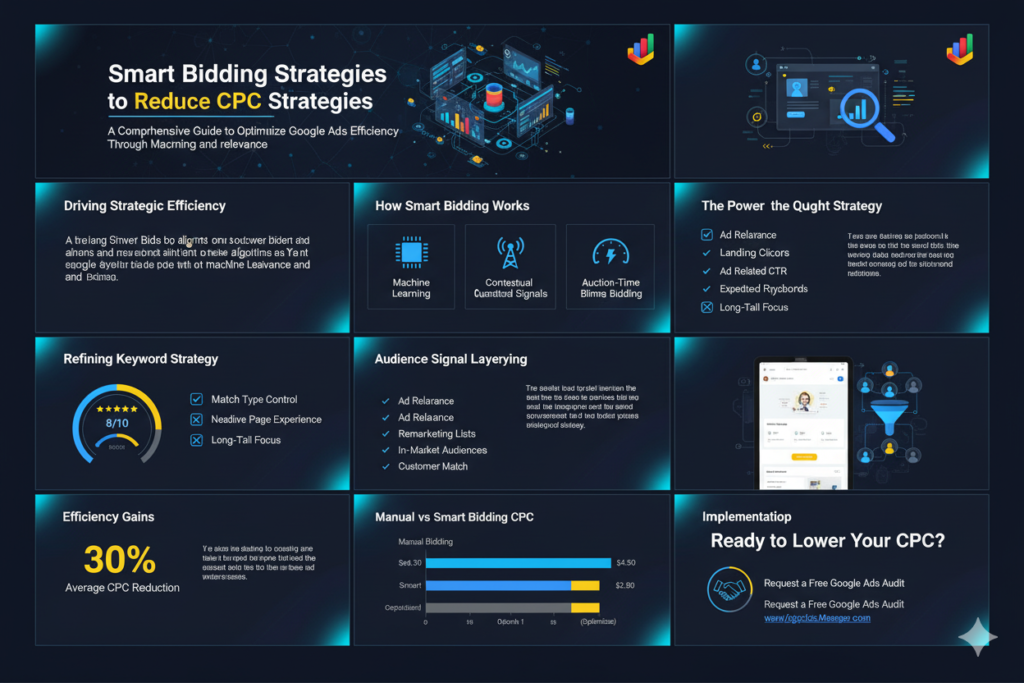
Smart Bidding uses machine learning to automate decisions based on real time signals. It focuses on maximizing conversions or revenue rather than just clicks.
The choice between the two depends on your campaign stage. Manual bidding works best when data is limited and control is important. Smart Bidding becomes more effective as your campaigns generate consistent conversion data.
A balanced approach often delivers the best results. Starting with manual bidding helps you build a strong understanding of performance, while transitioning to Smart Bidding allows you to scale efficiently.
Avoid switching strategies too frequently, as stability is important for consistent optimization.
How Everything Connects
Each of these elements plays a specific role, but their real power comes from how they work together.
A well structured campaign brings in the right traffic. Cost optimization ensures that traffic is acquired efficiently. A strong landing page converts that traffic into results. The right bidding strategy then scales those results without increasing waste.
When all four areas are aligned, your Google Ads campaigns become a predictable and scalable growth channel rather than a trial and error exercise.
If you want to connect all these pieces into a clear, data driven strategy tailored to your business, you can request a Free Google Ads Audit and discover exactly where your campaigns can improve.
FAQs
What is the most important part of Google Ads success
There is no single factor. Success comes from combining proper setup, cost control, strong landing pages, and the right bidding strategy.
How can I improve results without increasing budget
Focus on improving Quality Score, refining targeting, and optimizing your landing page to get more value from existing traffic.
Should beginners use Smart Bidding
Beginners can start with manual bidding to understand performance, then shift to Smart Bidding as data increases.
Why is my CPC high but conversions are low
This usually indicates poor keyword targeting, weak ad relevance, or an underperforming landing page.
How long does it take to see consistent results
Most campaigns stabilize within a few weeks, but continuous optimization is required for long term success.