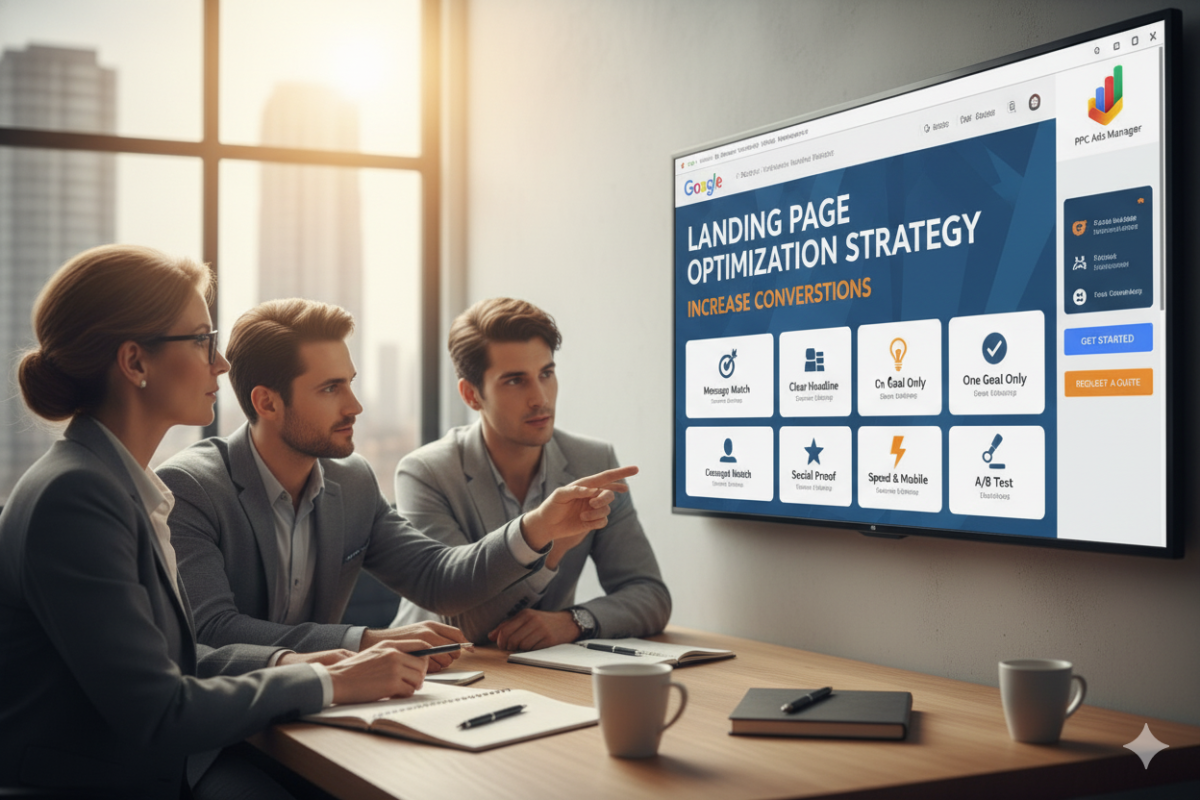
Driving traffic through Google Ads is only half the job. What truly determines your success is what happens after the click. A well structured landing page turns interest into action, while a poorly designed one wastes even the best performing campaigns. The right strategy focuses on clarity, relevance, and trust so that every visitor knows exactly what to do next.
Match Message with Intent
Your landing page must feel like a natural continuation of your ad. When users click on an ad promising a specific solution, they expect to land on a page that directly addresses that promise. Keep your headline aligned with your ad copy and keyword intent. This consistency reassures visitors that they are in the right place, which increases the chances of conversion.
Craft a Clear and Compelling Headline
The headline is the first thing users notice. It should communicate value instantly without confusion. Instead of being clever, focus on being clear. Highlight the benefit the user will receive and keep it simple enough to understand within seconds.
Focus on One Goal Only
High converting landing pages are built around a single objective. Whether it is generating leads, booking consultations, or driving purchases, everything on the page should support that one goal. Avoid adding multiple offers or distractions that dilute user attention.
Build Trust Through Social Proof
People trust what others have already validated. Add testimonials, case studies, ratings, or client logos to reinforce credibility. Real results and genuine feedback make your offer more believable and reduce hesitation.
Optimize for Speed and Mobile Experience
A slow landing page increases bounce rate and wastes your ad spend. Ensure your page loads quickly across all devices. Mobile optimization is especially important since a large portion of Google Ads traffic comes from mobile users. Clean layouts, readable text, and easy navigation make a big difference.
Use Strong Visual Hierarchy
Guide users through the page with a clear structure. Use headings, subheadings, and spacing to highlight important information. Keep the design clean so that users can scan the page quickly and find what they need without effort.
Write Persuasive Yet Simple Copy
Your copy should focus on benefits rather than just features. Explain how your product or service solves a problem. Use conversational language that feels natural and easy to understand. Avoid jargon that might confuse users.
Place Clear and Action Driven Buttons
Your call to action should stand out visually and be easy to find. Use action oriented phrases like Get Started, Book Now, or Request a Quote. Place buttons strategically across the page so users can take action whenever they are ready.
Reduce Friction in Forms
If your landing page includes a form, keep it simple. Ask only for essential information. Long and complicated forms reduce conversions. The easier it is to fill out, the more likely users are to complete it.
Test and Improve Continuously
There is no perfect landing page from the start. Run A B tests on headlines, layouts, images, and calls to action. Small improvements can lead to significant increases in conversion rate over time.
If your campaigns are bringing clicks but not enough conversions, it might be time to rethink your landing page strategy. You can request a free Google Ads Audit to identify gaps and discover practical ways to improve performance.

FAQs
What makes a landing page high converting
A high converting landing page is clear, relevant, fast, and focused on a single goal with strong messaging and trust elements.
How important is page speed for conversions
Page speed is critical. Even a few seconds of delay can significantly reduce conversion rates and increase bounce rate.
Should I use the same landing page for all ads
No. Each ad group should ideally have a tailored landing page that matches the specific intent of the keywords.
How many form fields should I include
Only include essential fields. Fewer fields usually result in higher conversion rates.