Reducing your cost per click in Google Ads is not just about lowering bids. It is about making smarter decisions that align with how Google’s algorithm evaluates intent, competition, and relevance. When done right, you can bring down CPC while maintaining or even improving the quality of your traffic.
Understand How Smart Bidding Actually Works
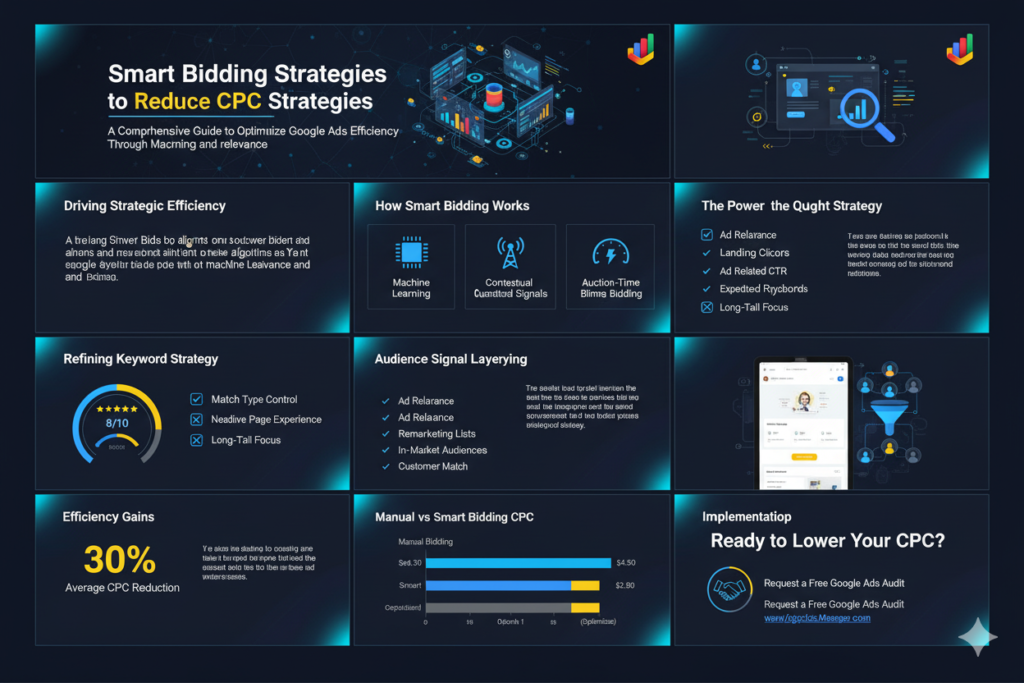
Smart Bidding uses machine learning to optimize bids in real time. It evaluates signals such as device, location, time of day, user behavior, and intent. Instead of manually adjusting bids, you allow Google to predict which clicks are more likely to convert and bid accordingly.
To reduce CPC, the goal is not to chase cheaper clicks blindly, but to guide the algorithm toward high value clicks at a lower cost.
Choose the Right Smart Bidding Strategy
Each bidding strategy serves a different purpose. Picking the right one directly impacts your CPC.
- Maximize Clicks helps you get the most clicks within your budget, often reducing CPC quickly, but may sacrifice quality if not monitored
- Target CPA focuses on conversions and tends to stabilize CPC over time as the system learns
- Target ROAS is ideal for eCommerce and prioritizes revenue efficiency rather than just clicks
If your goal is to reduce CPC without hurting conversions, Target CPA is usually the most balanced option once you have enough data.
Improve Quality Score to Lower CPC Naturally
Quality Score is one of the biggest factors affecting your CPC. A higher score means you pay less per click.
Focus on improving:
- Ad relevance by tightly matching keywords with ad copy
- Landing page experience by ensuring fast load speed and clear messaging
- Expected CTR by writing compelling and specific ads
Even a small improvement in Quality Score can significantly reduce CPC over time.
Refine Keyword Targeting
Broad keywords often attract irrelevant clicks, increasing your CPC. Instead:
- Use phrase match and exact match for better control
- Add negative keywords regularly to filter out low intent traffic
- Focus on long tail keywords that have lower competition and higher intent
This ensures your budget is spent only on users who are more likely to convert.
Use Audience Signals to Your Advantage
Smart Bidding becomes more powerful when you provide audience data. Layer in:
- In market audiences
- Remarketing lists
- Customer match data
By narrowing your audience to users with higher intent, Google can bid more efficiently and reduce unnecessary spending.
Optimize Ad Copy for Higher CTR
A higher click through rate often leads to a lower CPC. Write ads that:
- Address specific pain points
- Include clear benefits instead of generic claims
- Use strong calls to action like Get a Quote or Book a Free Consultation
When more people click your ad compared to competitors, Google rewards you with lower costs.
Adjust Location and Device Targeting
Not all clicks are equal. Some locations and devices may drive higher costs without delivering results.
Analyze your data and:
- Reduce bids for underperforming locations
- Increase bids where conversions are strong
- Optimize mobile experience if mobile traffic dominates
This helps allocate budget more efficiently and brings down your average CPC.
Leverage Ad Extensions
Ad extensions improve visibility and increase CTR, which indirectly reduces CPC. Use:
- Sitelink extensions to guide users to specific pages
- Call extensions for direct inquiries
- Callout extensions to highlight key benefits
More engaging ads lead to better performance at a lower cost.
Be Patient with Learning Phase
Smart Bidding needs time to learn. Frequent changes reset the learning phase and can increase CPC temporarily.
Allow campaigns to run for at least one to two weeks before making major adjustments. Stability helps the algorithm optimize effectively.
Track and Optimize Continuously
Reducing CPC is an ongoing process. Regularly review:
- Search term reports
- Conversion data
- Auction insights
Small consistent improvements lead to long term cost efficiency.
If you want a clear, data driven plan to reduce your CPC and improve conversions, you can request a Google Ads Audit and get actionable insights tailored to your campaigns.
FAQs
What is a good CPC in Google Ads
A good CPC depends on your industry, but the real benchmark is whether your clicks are profitable. Lower CPC with poor conversions is not effective.
Does Smart Bidding always reduce CPC
Not always immediately. It focuses on improving conversions first. Over time, it often reduces wasted spend and brings CPC down.
How long does it take to see results with Smart Bidding
Usually one to two weeks for the learning phase, but meaningful improvements are seen over a month with stable data.
Can I manually control CPC with Smart Bidding
You cannot directly set CPC, but you can influence it through strategy, audience signals, and campaign structure.