Introduction
Performance marketing is one of the most effective ways for businesses in the US to generate measurable results from digital advertising.
Unlike traditional marketing, where you pay for exposure, performance marketing focuses on outcomes.
You only pay when a specific action happens.
That action could be:
- A click
- A lead
- A sale
- A conversion
This makes performance marketing highly attractive for small businesses, startups, and enterprises looking to maximize ROI.
In this guide, you’ll learn what performance marketing is, how it works, key channels, strategies, and how to use it effectively in 2026.
What Is Performance Marketing?
Performance marketing is a digital marketing strategy where advertisers pay based on measurable results such as clicks, leads, or sales.
Instead of paying upfront for visibility, businesses invest in campaigns that deliver trackable outcomes.
Simple Example
A business runs Google Ads:
- Pays only when someone clicks → Pay-Per-Click (PPC)
- Pays only when a lead is generated → Cost-Per-Lead (CPL)
- Pays only when a sale happens → Cost-Per-Acquisition (CPA)
Why Performance Marketing Matters in the US Market
The US digital advertising space is highly competitive.
Businesses need:
- Measurable ROI
- Scalable strategies
- Cost control
Key Benefits
- Data-driven decisions
- Real-time optimization
- Budget control
- High accountability
Key Channels in Performance Marketing
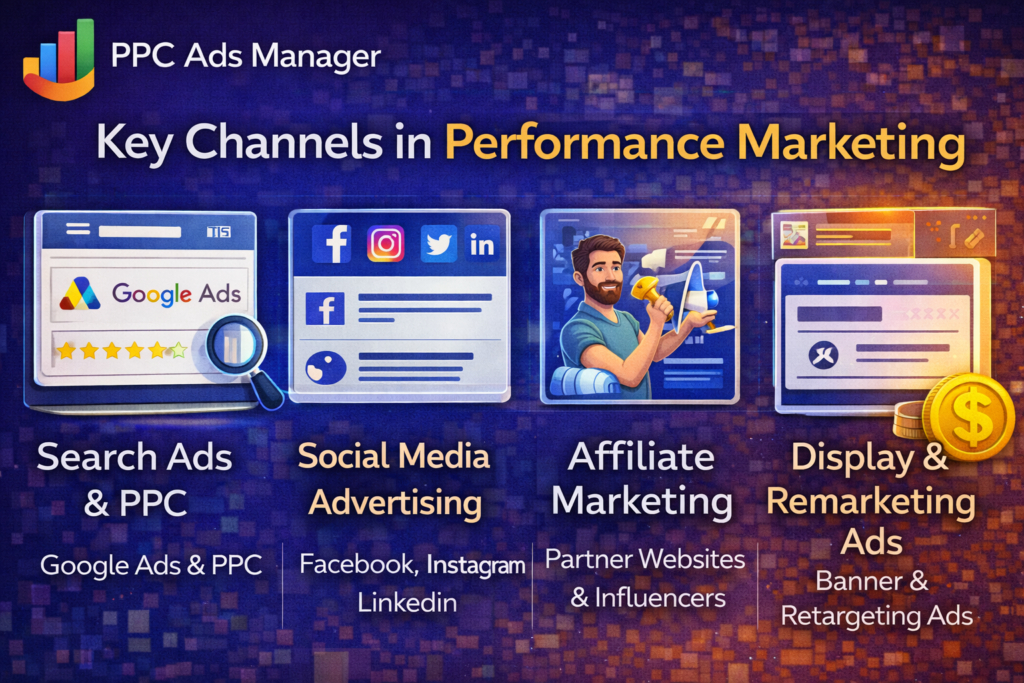
1. Search Advertising (Google Ads)
This is the most powerful channel.
Why?
- High-intent users
- Immediate visibility
- Strong conversion potential
Example
A law firm targeting:
“personal injury lawyer NYC”
Can generate leads instantly.
2. Social Media Advertising
Platforms:
Best For:
- Brand awareness
- Retargeting
- Lead generation
3. Affiliate Marketing
Businesses partner with affiliates who promote their products.
Payment Model:
- Commission per sale
- Commission per lead
4. Display & Remarketing Ads
Used to re-engage users.
Example
A user visits your website →
Sees your ads later →
Returns and converts
Performance Marketing vs Traditional Marketing
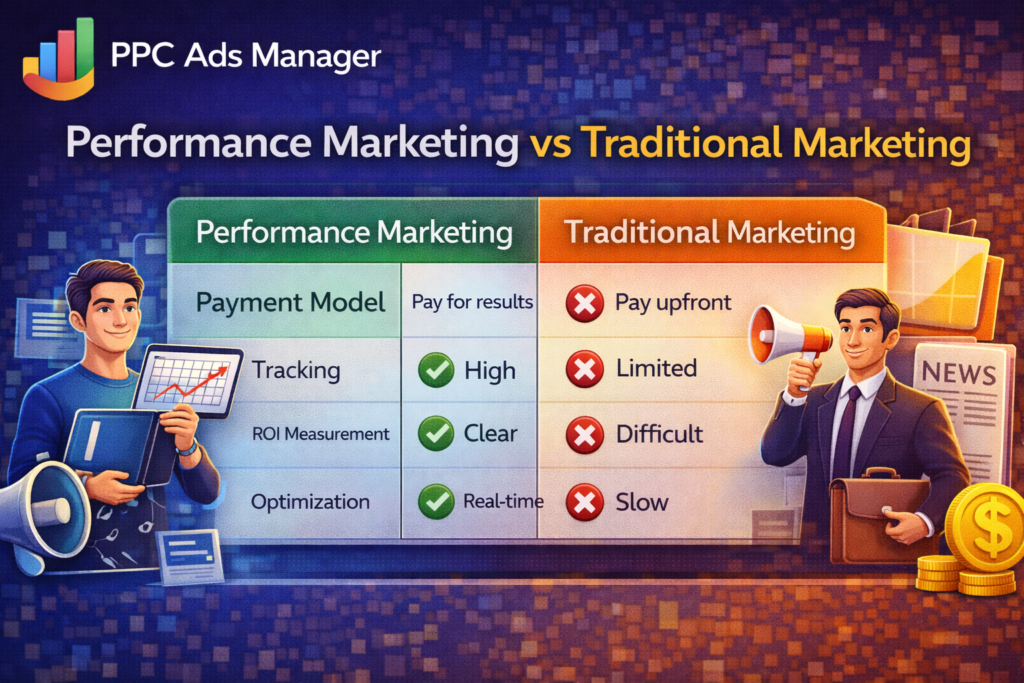
| Factor | Performance Marketing | Traditional Marketing |
| Payment Model | Pay for results | Pay upfront |
| Tracking | High | Limited |
| ROI Measurement | Clear | Difficult |
| Optimization | Real-time | Slow |
Key Metrics in Performance Marketing
Understanding metrics is critical.
Important Metrics
- CPC (Cost Per Click)
- CPL (Cost Per Lead)
- CPA (Cost Per Acquisition)
- CTR (Click Through Rate)
- Conversion Rate
US Benchmarks
| Metric | Range |
| CPC | $1 – $20+ |
| Conversion Rate | 2% – 10% |
| CPL | $20 – $200+ |
How Performance Marketing Works
Step-by-Step Process
- Define goal (leads, sales, traffic)
- Choose platform (Google, Meta, etc.)
- Set budget
- Create ads
- Launch campaign
- Track performance
- Optimize continuously
Real-World Scenario
A small e-commerce business in California:
Before:
- Running ads without tracking
- No clear goals
After implementing performance marketing:
- Set CPA target
- Used Google Ads + remarketing
- Optimized campaigns
Result:
40% increase in sales within 60 days
Common Performance Marketing Strategies
1. Target High-Intent Keywords
Focus on users ready to buy.
2. Use Data to Optimize
Pause low-performing campaigns. Scale winners.
3. Retarget Interested Users
Most users don’t convert first time.
4. A/B Test Everything
Test:
- Ads
- Headlines
- Landing pages
5. Focus on Conversion Rate
Traffic alone is useless without conversions.
Common Mistakes to Avoid
- Running ads without tracking
- Ignoring data
- Targeting broad audience
- No landing page optimization
- No retargeting strategy
Want better results from your marketing spend?
Stop guessing. Start tracking real performance.
Get a free performance marketing audit and discover how to increase leads and reduce costs.
We’ll analyze your:
- Campaign strategy
- Ad performance
- Conversion tracking
- ROI
And give you a clear action plan.
Conclusion
Performance marketing is not just a trend.
It’s a smarter way to run digital advertising.
Instead of paying for visibility, you pay for results.
This makes it one of the most efficient marketing strategies in 2026.
If you want scalable growth, measurable ROI, and better control over your budget — performance marketing is the way forward.
FAQs
1. What is performance marketing in simple terms?
It is a marketing strategy where you pay only when specific results like clicks or sales happen.
2. Is performance marketing better than traditional marketing?
Yes, because it offers measurable results and better ROI tracking.
3. What platforms are used in performance marketing?
Google Ads, Facebook Ads, affiliate networks, and display advertising.
4. How do you measure success in performance marketing?
Using metrics like CPC, CPA, conversion rate, and ROI.