Introduction
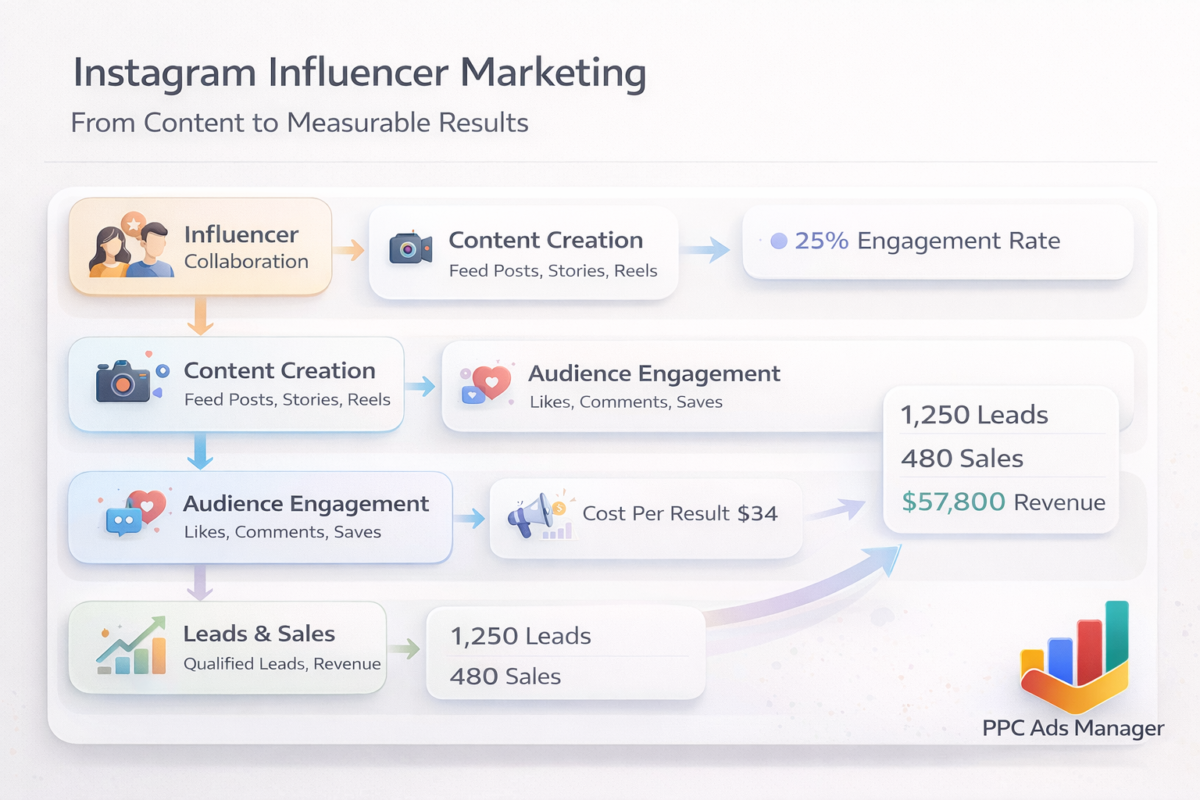
Instagram influencer marketing has evolved from simple brand mentions to a powerful business growth channel. Today, brands use influencers not just for visibility, but to drive engagement, website traffic, and conversions.
For businesses in competitive industries like e-commerce, real estate, and local services, influencer marketing works best when it is planned strategically and supported by performance tracking. This is where a structured, agency-led approach makes a difference.
At PPC Ads Manager, influencer campaigns are designed to align with business goals—not just likes or followers. This guide explains how Instagram influencer marketing works, how brands should approach it, and how it delivers measurable results.
What Is Instagram Influencer Marketing?
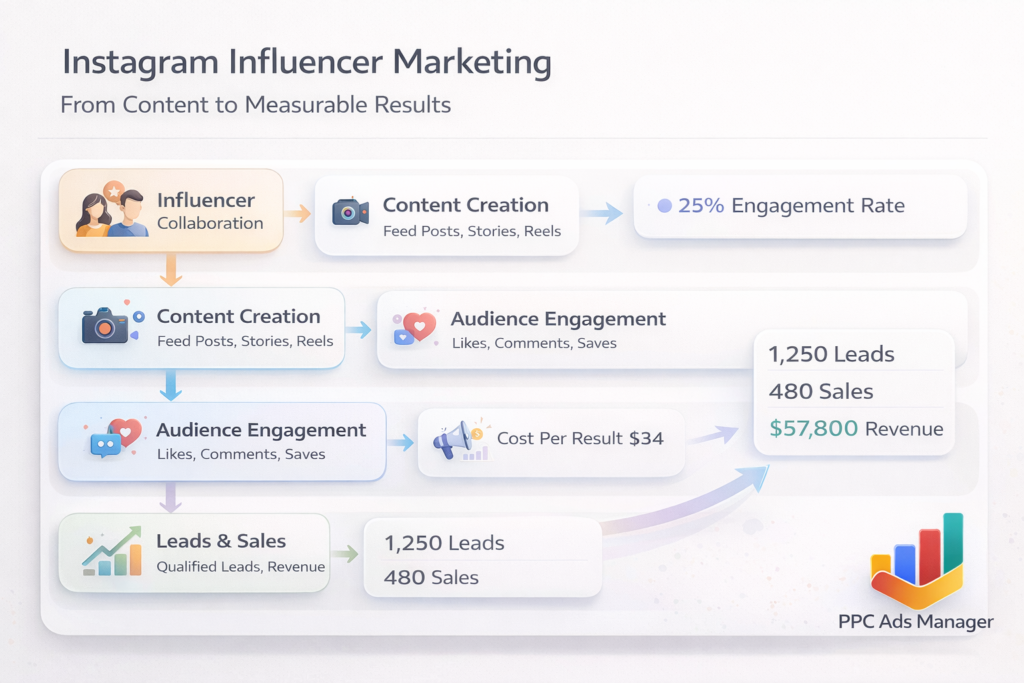
Instagram influencer marketing is a strategy where brands collaborate with creators who have a loyal and engaged audience. These influencers promote products or services through content that feels natural and trustworthy.
Common content formats include:
- Feed posts
- Stories
- Reels
- Short video reviews
Unlike traditional ads, influencer content feels personal, which increases credibility and response rates.
Why Influencer Marketing Works for Businesses
People trust recommendations from real people more than ads. This is why influencer marketing performs well across industries.
Key business benefits:
- Builds trust and brand credibility
- Reaches niche and targeted audiences
- Improves engagement rates
- Supports sales and lead generation
- Creates reusable content for paid ads
For example, an e-commerce brand promoting a product through a micro-influencer often sees higher conversion rates than running cold ads alone.
Types of Instagram Influencers (And How Brands Should Use Them)
1. Nano Influencers (1K–10K followers)
Best for: Local businesses and niche products
- High engagement
- Strong audience trust
- Budget-friendly
2. Micro Influencers (10K–100K followers)
Best for: E-commerce and D2C brands
- Best balance of reach and ROI
- Ideal for product launches
- Strong conversion potential
3. Macro Influencers (100K–1M followers)
Best for: Brand awareness campaigns
- Wider reach
- Higher cost
- Lower engagement than micro influencers
4. Celebrity Influencers (1M+ followers)
Best for: Large branding campaigns
- Massive visibility
- Very expensive
- Limited performance tracking
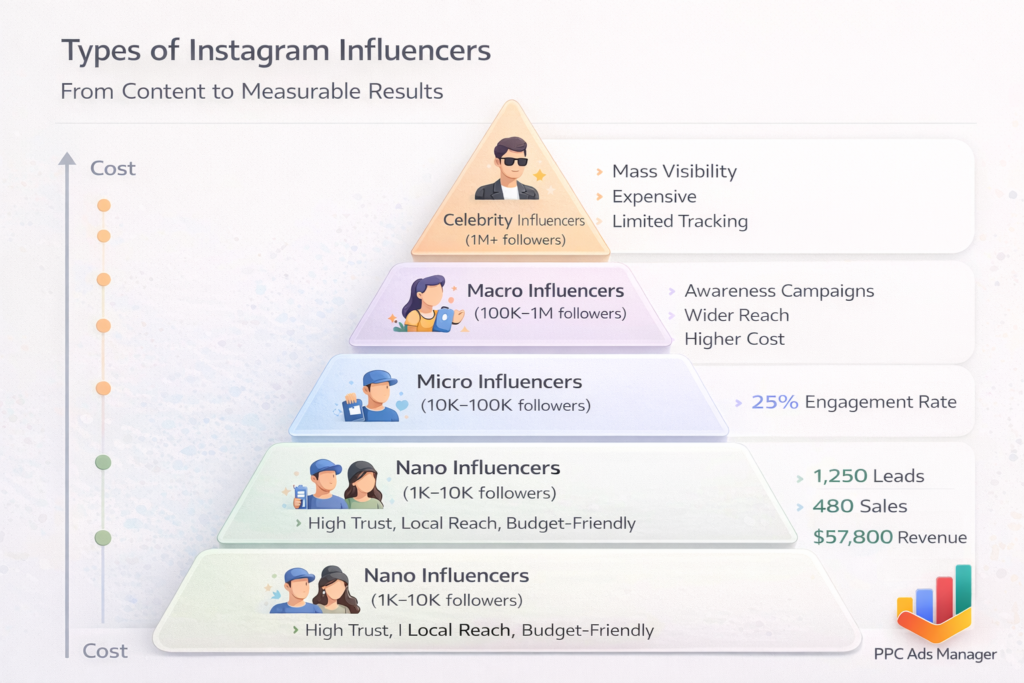
In most performance-focused campaigns, micro influencers deliver the best results.
Industry Examples: How Influencer Marketing Works in Practice
E-Commerce Brands
Influencers create product demo videos, reviews, or unboxing content.
High-performing posts are later boosted using Instagram ads for better reach and sales.
Real Estate Businesses
Local influencers promote property walkthroughs or location highlights, helping builders reach nearby buyers and generate enquiries.
Local & Service Businesses
Creators share personal experiences, helping businesses build trust within a specific city or community.
These examples show why influencer marketing works best when combined with clear objectives.
Influencer Marketing vs Instagram Ads
| Influencer Marketing | Instagram Ads |
| Builds trust | Scales quickly |
| Feels organic | Full targeting control |
| Long-term brand value | Immediate results |
Best strategy:
Use influencer content first, then amplify the best-performing posts using paid Instagram ads.
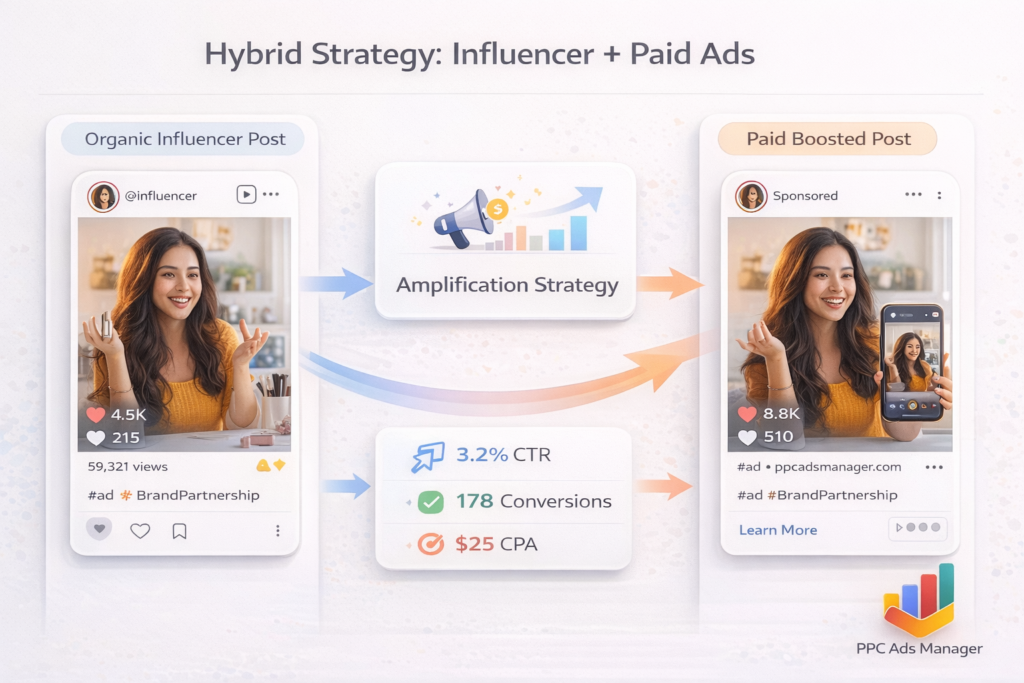
This hybrid approach is commonly used by PPC Ads Manager to maximise campaign performance.
Common Mistakes Brands Make
Many brands waste budget due to poor planning.
- Choosing influencers only by follower count
- No clear campaign goals
- No tracking of results
- One-time collaborations
- Over-controlling creative content
Influencer marketing works best when influencers have creative freedom but clear guidelines.
How PPC Ads Manager Approaches Influencer Marketing
At PPC Ads Manager, influencer marketing is handled with a performance mindset.
The process includes:
- Understanding the client’s business goals
- Selecting influencers based on audience relevance
- Planning content aligned with brand messaging
- Tracking engagement, traffic, and conversions
- Scaling high-performing content using paid ads
This approach ensures influencer campaigns deliver real business value, not just vanity metrics.
Measuring Influencer Campaign Success
Important metrics to track include:
- Reach and impressions
- Engagement rate
- Website traffic
- Leads or sales
- Cost per result
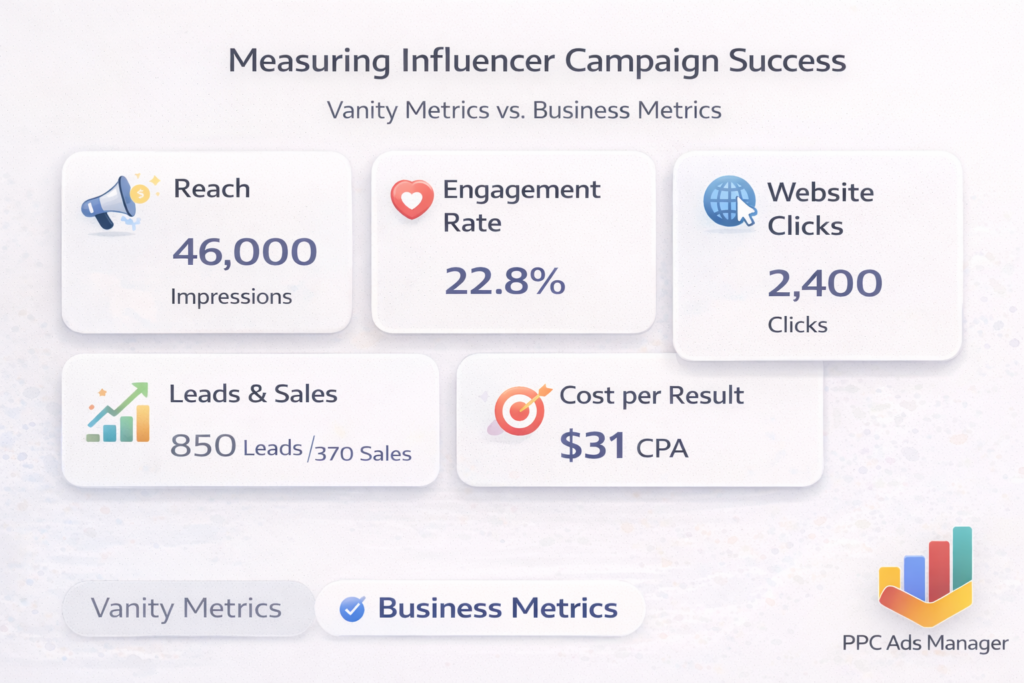
Tracking helps brands optimise future campaigns and improve ROI.
Conclusion
Instagram influencer marketing is a powerful tool when used strategically. Brands that focus on relevance, authenticity, and performance tracking see better results than those chasing followers alone.
By combining influencer content with paid promotion and clear measurement, businesses can turn Instagram into a consistent growth channel. Working with an experienced agency like PPC Ads Manager ensures campaigns are structured for results, not guesswork.
Written by Rohith Bingi