Introduction
Running an e-commerce business is no longer just about having a good product or a clean website. Competition is high, customer attention is limited, and buying decisions happen fast. This is where Google Ads for e-commerce becomes one of the most powerful growth tools.
Google Ads allows e-commerce brands to reach users who are already searching for products with buying intent. When set up correctly, it helps generate consistent sales, control ad spend, and scale revenue predictably. This guide explains how Google Ads works for e-commerce, which campaign types perform best, common mistakes, and how to improve return on investment (ROI).
Why Google Ads Works for E-Commerce Businesses
Google Ads focuses on intent-based marketing. This means your ads appear when users are actively searching for products, brands, or solutions.
Key reasons e-commerce brands use Google Ads:
- Reach customers ready to buy
- Show ads based on product searches
- Control budgets and bidding
- Track sales and conversions accurately
For example, a user searching “buy wireless earbuds online” is far more likely to convert than someone browsing casually on social media.
Types of Google Ads Campaigns for E-Commerce
Different campaign types serve different goals. Successful e-commerce strategies usually combine multiple formats.
1. Search Ads
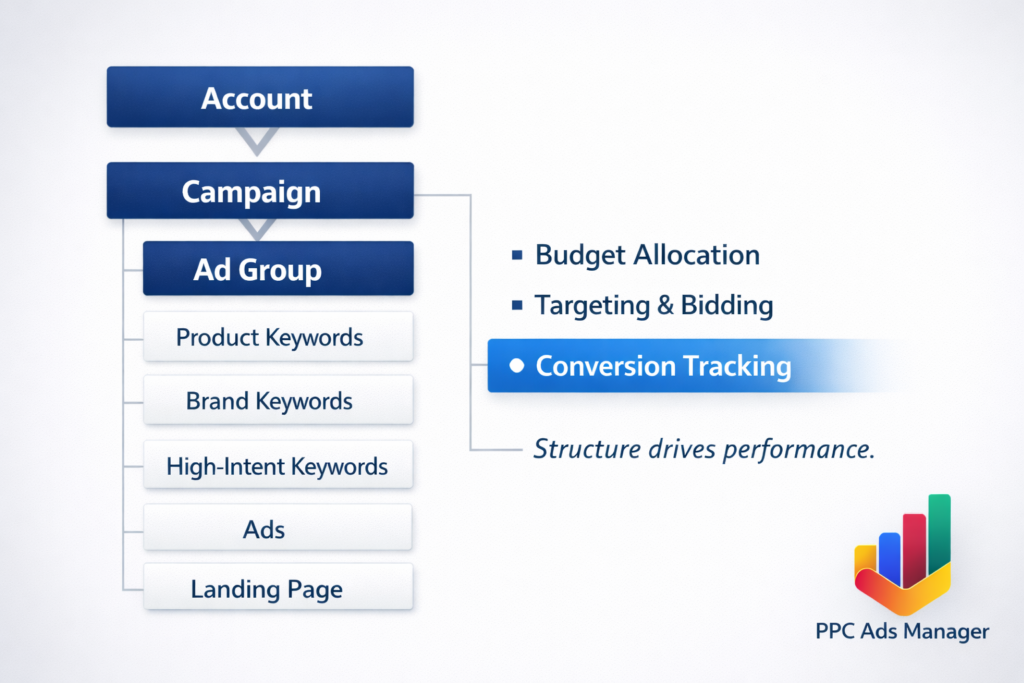
Search ads appear at the top of Google search results.
Best for:
- Product-specific searches
- Brand keywords
- High-intent buyers
Example searches:
- Buy running shoes online
- Best laptop under 60,000
- Organic skincare products
Search ads deliver high-quality traffic and strong conversion rates.
2. Shopping Ads
Shopping ads display product images, prices, and brand names directly in search results.
Why shopping ads work well:
- Visual product display
- Price transparency
- Higher click-through rates
Shopping ads are ideal for e-commerce stores with multiple products and competitive pricing.
3. Display Ads
Display ads show banner ads across websites and mobile apps.
Best use cases:
- Brand awareness
- Retargeting website visitors
- Cart abandonment campaigns
Display ads work best when used for retargeting rather than cold traffic.
4. Performance Max Campaigns
Performance Max uses automation to run ads across Search, Shopping, YouTube, Display, and Gmail.
Best for:
- Scaling campaigns
- Reaching users across multiple platforms
- Data-driven optimisation
This campaign type works well when conversion tracking is set up correctly.
Keyword Strategy for E-Commerce Google Ads
Keyword selection directly impacts cost, traffic quality, and sales.
High-Intent Keyword Types
- Product names and models
- Category-based keywords
- Brand-specific keywords
- “Buy online” and price-based searches
Keywords to Avoid
- Very broad terms (e.g shoes)
- Informational searches
- Job or review-only queries
Using phrase match and exact match keywords helps attract buyers instead of browsers.
Product Pages and Landing Pages Matter
Driving traffic alone is not enough. Your product pages must support conversions.
A high-converting product page should include:
- Clear product images
- Simple product descriptions
- Pricing and offers
- Customer reviews
- Easy checkout process
Poor landing pages increase cost per conversion, even with well-optimised ads.
Cost of Google Ads for E-Commerce
Google Ads costs vary based on competition, product type, and targeting.
Typical cost benchmarks:
| Metric | Estimated Range |
| Cost per Click (CPC) | $0.05 – $1.65 |
| Cost per Conversion | $3.30 – $32.95 |
* Varies based on industry niche, competition, location.
Common Mistakes E-Commerce Businesses Make
Many e-commerce advertisers lose money due to basic errors.
- Running ads without conversion tracking
- Sending traffic to poor product pages
- Ignoring negative keywords
- Not using performance max and shopping ads
- Scaling budgets too quickly
Avoiding these mistakes improves campaign stability and profitability.
Best Practices to Improve E-Commerce Google Ads Performance
Follow these proven practices to get better results:
- Track purchases and revenue accurately
- Optimise campaigns weekly
- Use remarketing for repeat buyers
- Focus on profitable products first
- Align ads with pricing and offers
Google Ads performance improves over time with consistent optimisation.
How Google Ads Fits Into an E-Commerce Growth Strategy
Google Ads works best when combined with:
- SEO for long-term traffic
- Email marketing for repeat sales
- Social media ads for awareness
- Retargeting across platforms
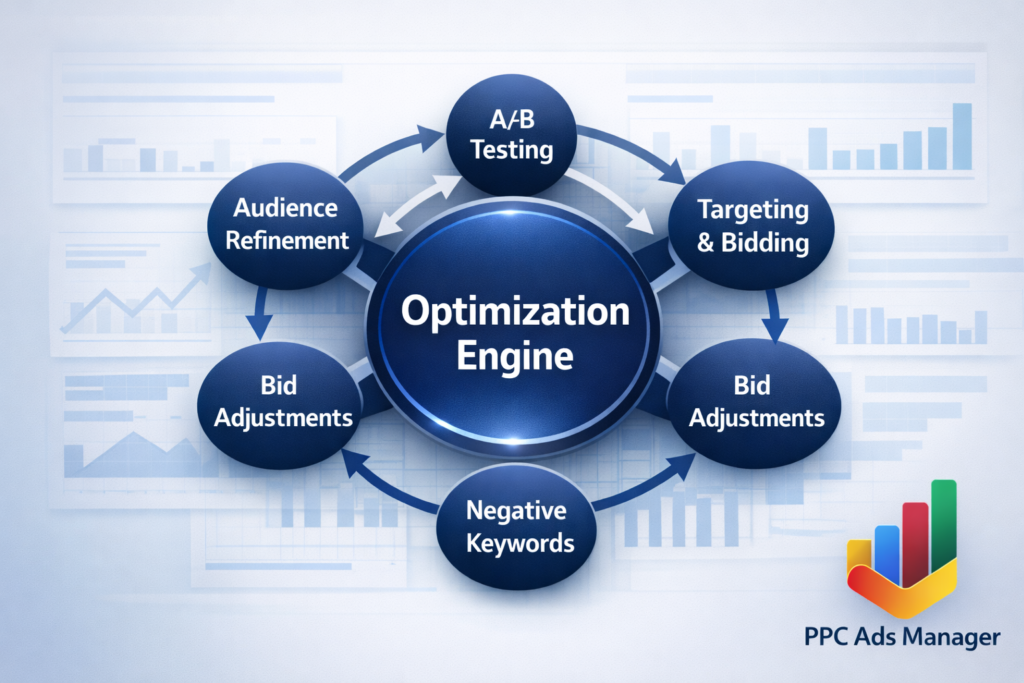
This multi-channel approach increases customer lifetime value and brand recall.
Conclusion
Google Ads is one of the most effective channels for e-commerce growth when used strategically. By targeting high-intent keywords, using the right campaign types, and optimising product pages, e-commerce businesses can drive consistent sales and strong ROI. With proper tracking and regular optimisation, Google Ads can become a scalable and reliable revenue channel for online stores.
Written by Rohith Bingi